


Excess keratin on the skin builds up when dead surface cells are made faster than they are shed, or when they stick together and fail to shed at all. Friction, dryness, ageing and inherited conditions such as keratosis pilaris and ichthyosis are the usual reasons. Keratolytic ingredients such as AHAs, urea and salicylic acid loosen the build-up so it lifts away; diet and keratin supplements make no difference to it.
The question is not really how much keratin you have, but how quickly the cells that contain it are produced and released. Once that is clear, the causes and the fixes make much more sense. For thick skin on the feet and hands specifically, and how to tell a callus from a corn, see the guide to thickened skin.
What keratin is
Keratin is a tough, fibrous protein. It is the main structural material of the outer layer of the skin, and of hair and nails. In the skin it is made by cells called keratinocytes, which start life in the deepest layer of the epidermis.
As those cells move upwards they fill with keratin, flatten, lose their nucleus and die. By the time they reach the surface they are thin, hard, protein-filled flakes stacked in layers, held together by fats and protein bonds. This top layer, the stratum corneum, is what keeps water in and irritants out. Keratinized skin is simply skin whose surface layer is made of these keratin-filled cells, which is to say all normal skin. It only becomes a problem when the layer gets too thick.
How normal shedding works
In healthy skin the journey from the bottom layer to the surface takes roughly four weeks. At the top, enzymes gradually break down the bonds holding the dead cells together, and they come away one at a time, invisibly.
That release step depends on water. The enzymes that cut the bonds work properly only when the outer layer is adequately hydrated. This is one reason dry skin tends to look rough and flaky: the cells are still there, but they are not letting go cleanly, so they lift in clumps instead.
Two ways to end up with too much. Either the skin makes cells faster than normal, or it makes them at a normal rate but fails to release them. The second, called retention, is behind most stubborn build-up, and it is why removing the surface layer works better than simply moisturising over it.
Why keratin builds up
Friction and pressure
Repeated rubbing or pressure tells the skin to protect itself by producing more keratin. This is how calluses form on the heels, soles and palms, and why elbows that are leaned on thicken. It reverses slowly once the pressure stops.
Dryness
When the outer layer is short of water, the shedding enzymes slow down and dead cells accumulate. This kind of build-up is usually thin and improves quickly once the skin is properly hydrated.
Ageing
Older skin renews more slowly and holds less water, so dead cells sit on the surface for longer.
Keratosis pilaris
Here keratin collects in the openings of hair follicles and forms small plugs, producing rough bumps on the upper arms, thighs and sometimes cheeks. It is very common and often runs in families.
Genetics and ichthyosis
Some people inherit skin that does not shed properly. In ichthyosis vulgaris, a reduced amount of the protein filaggrin weakens the barrier and slows the release of dead cells, so scale builds up, often on the shins. These are lifelong conditions; they can be kept under good control but not cured. The guide on whether dry skin is genetic covers the inherited side in more detail.
Other conditions
Psoriasis, chronic eczema, chronic scratching and some other skin conditions also thicken the skin. These involve inflammation and need diagnosis and treatment from a GP rather than an exfoliant.
Keratin on the feet
The feet are where most people notice excess keratin first. The soles already have the thickest skin on the body, they take your full weight with every step, and they have no oil glands. The result is the familiar thick, yellowish skin on the heels and balls of the feet.
- Soak for ten minutes, then use a foot file gently on damp skin, a little and often.
- Apply a urea or AHA foot cream daily to keep the build-up soft and loosening.
- Never cut thick skin with a blade at home.
- If you have diabetes, poor circulation or reduced feeling in your feet, leave thick skin to a podiatrist.
How to loosen excess keratin
The ingredients that help are called keratolytics. They do not dissolve keratin itself; they loosen the bonds holding the dead cells together, so the build-up comes away gradually instead of in a painful scrub.
| Ingredient | How it works | Best suited to |
|---|---|---|
| AHAs (glycolic and lactic acid) | Weaken the bonds between surface cells so they release; lactic acid also draws in water | Rough, dry, scaly body skin, keratosis pilaris, mild build-up |
| Urea | Hydrates at lower strengths and softens and loosens keratin at higher strengths | Very dry skin, heels, calluses, ichthyosis |
| Salicylic acid | Loosens the layers of dead skin and works inside oily pores | Thick localised build-up, scalp scale, follicle plugs |
| Plain emollients | Restore water and soften the surface, but do not remove build-up | Simple dryness, and as a base layer alongside any of the above |
Whichever you choose, use it on intact skin, start once a day if your skin is sensitive, and expect results over weeks. A cheap pharmacy urea cream is often all that is needed for heels and simple dry build-up, and the guide to urea cream for dry skin covers strengths.
Does diet or a supplement help?
No. Excess keratin on the skin is not caused by eating too much protein, and it is not fixed by eating less. Keratin supplements, collagen powders, biotin and "skin, hair and nails" tablets do not change how quickly your skin sheds or reduce build-up. The skin makes its own keratin from the normal protein in your diet, and the problem is in the shedding process, not the supply.
Drinking more water does not meaningfully hydrate the outer layer either. What makes a difference is what you put on the skin.
Where G16 fits, and where it does not
G16 Skin Repair Lotion is a light, non-greasy body lotion with glycolic acid as its second ingredient and lactic acid behind it, alongside aloe vera, glycerin, panthenol, allantoin, vitamin E and shea butter. The AHAs loosen built-up dead skin so it lifts away while the rest hydrates. That makes it relevant to retained build-up on intact skin: rough, scaly areas, keratosis pilaris, and dry thickening that moisturising alone has not shifted. It can form part of managing inherited dry skin conditions such as ichthyosis vulgaris.
It is not a urea cream and contains no salicylic acid. Use it twice daily, left on as long as possible. Expect a flakier phase around day five to seven and a visible difference within two weeks. The full course is 28 days, and long-standing thick areas can take up to about six weeks. Patch test first and use sunscreen on exposed areas.
It is not for cracked, broken, raw, inflamed or infected skin. It is also the most expensive option compared with pharmacy creams, so for heels or simple dryness a pharmacy urea cream may be the sensible first step.
When to see a GP
- Thick skin on the feet if you have diabetes, poor circulation or numbness. See a podiatrist or GP.
- Thickened skin that is red, itchy, inflamed or has silvery scale.
- Build-up that is widespread, present from childhood, or not improving after six weeks of a keratolytic.
- Thick skin that cracks, bleeds or shows signs of infection.
- Velvety, darkened thickening in skin folds such as the neck or armpits.
- A single thickened spot that is growing, changing or tender.
Common questions
Usually friction, dryness or ageing, which either speed up production or slow down shedding. Keratosis pilaris and inherited conditions such as ichthyosis are other common causes. In most cases the problem is that dead cells are not being released properly, rather than the body making too much keratin.
It describes the outer layer becoming thicker than normal because keratin-filled cells build up. It is a description of what is happening, not a diagnosis. Calluses, keratosis pilaris and ichthyosis all involve it, for quite different reasons.
Use a keratolytic: an AHA such as glycolic or lactic acid, a higher-strength urea cream, or salicylic acid. These loosen the bonds between dead cells so the build-up lifts away over a few weeks. Combine with daily moisturising and gentle, regular filing on the feet. Avoid aggressive scrubbing and never cut thick skin.
Neither. Supplements and diet do not change how quickly skin sheds. Your skin makes its own keratin from ordinary dietary protein, and build-up is a shedding problem. Treating the skin surface is what makes a difference.
The soles carry your weight, rub against shoes and have no oil glands, so they thicken to protect themselves and dry out easily. Better-fitting shoes, regular gentle filing and a urea or AHA foot cream usually keep it under control. If you have diabetes or reduced feeling, see a podiatrist instead.
The product behind this guide
G16 Skin Repair is a glycolic and lactic acid body lotion for built-up, scaly and thickened skin.
200ml. Made in the UK. 21 day money back guarantee.
Keratosis treatment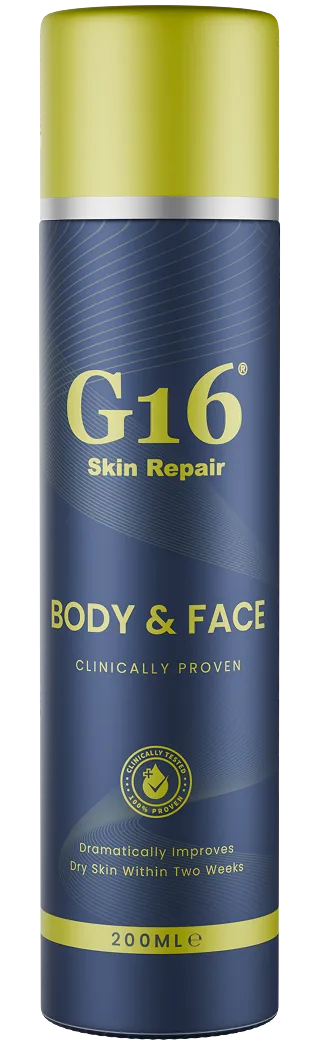
G16 Skin Repair Lotion is a cosmetic moisturiser. Patch test on a small area before first use, keep it away from the eyes and mucous membranes, and keep it out of reach of children. If your skin is broken, bleeding or infected, or if it gets worse rather than better, speak to a GP or a dermatologist.
