



No, urea is not considered a photosensitiser, so a plain urea cream does not make your skin noticeably more likely to burn in the way alpha hydroxy acids (AHAs) and retinoids do. At moisturising strengths it mainly draws water into the skin rather than stripping away the protective outer layer. The catch is that many urea creams also contain lactic acid or other acids, and those ingredients do raise sun sensitivity, so it is the full ingredient list that matters, not just the word urea on the front.
This question comes up a lot because urea creams and acid lotions sit side by side on the pharmacy shelf, are sold for the same rough, dry skin, and are often described with the same words: smoothing, softening, exfoliating. They behave quite differently in the sun, though.
Why urea does not raise sun sensitivity
Urea is a natural part of the skin's own moisturising factor, the mix of small water-attracting molecules in the outer layer. At 5 to 10 per cent, the strength of most body creams, it works as a humectant: it pulls water into the surface cells and holds it there. It does not dissolve the bonds between cells in any significant way, so the outer layer stays intact.
That outer layer, the stratum corneum, is made of flattened dead cells, and it does more than look rough. It scatters and absorbs some ultraviolet light before it reaches the living cells underneath. Ingredients that thin it quickly, such as AHAs, remove part of that natural shield. Urea at moisturising strengths does not, and it does not react with light in the skin either.
What about high-strength urea?
At 20 to 40 per cent urea becomes keratolytic, meaning it breaks down keratin and softens thick skin. In theory any ingredient that removes dead skin leaves the area a little more exposed. In practice these strengths are used on heels and soles, which rarely see much sun, and urea is still not regarded as a photosensitiser. If you do use a strong urea cream on a sun-exposed area such as the backs of the hands, sunscreen there is a sensible precaution rather than a strict rule.
Read the back of the tube. Several well-known urea ranges also include lactic acid, sodium lactate or other acids for extra smoothing. Lactic acid is an AHA, and an AHA in the formula brings AHA sun sensitivity with it. Sodium lactate on its own is a humectant salt and much milder, but if the label lists lactic acid, glycolic acid or "AHA", treat the product as an acid lotion in the sun.
Which skin ingredients do make you burn more easily?
AHAs: glycolic and lactic acid
Alpha hydroxy acids loosen the bonds between dead cells so they shed more evenly. That is exactly why they work on rough and scaly skin, and exactly why they increase sun sensitivity: the protective layer becomes thinner while you use them. The effect is well established. In the United States, AHA products are expected to carry a sunburn warning advising sunscreen during use and for a week afterwards. Glycolic acid penetrates fastest; lactic acid is a little gentler, but the advice is the same. Our guide to lactic acid vs glycolic acid covers the differences in more detail.
Retinoids
Retinoids speed up cell turnover and thin the outer layer, and skin on them is noticeably more prone to burning and irritation in strong sun. Prescription retinoids, such as tretinoin and adapalene, come with clear sun advice, and cosmetic retinol carries a milder version of the same concern.
Salicylic acid (BHA)
Salicylic acid, the beta hydroxy acid, is oil-soluble and works mainly into pores and follicles. It is generally considered less photosensitising than AHAs. Even so, freshly exfoliated skin of any kind burns more easily, so sunscreen on treated areas that will be exposed is still sensible.
| Ingredient | Raises sun sensitivity? | What to do |
|---|---|---|
| Urea, 5 to 10 per cent | Not considered a photosensitiser | No special precaution; normal sun sense applies |
| Urea, 20 to 40 per cent | Not regarded as a photosensitiser; used mostly on feet | Sunscreen if you use it on exposed skin |
| Urea cream with lactic acid | Yes, because of the AHA | Treat it as an acid lotion: sunscreen on exposed areas |
| Glycolic acid (AHA) | Yes, clearly | Daily sunscreen on exposed areas, and for a week after stopping |
| Lactic acid (AHA) | Yes | Daily sunscreen on exposed areas, and for a week after stopping |
| Salicylic acid (BHA) | Less than AHAs | Sunscreen on treated areas that see the sun |
| Retinoids and retinol | Yes | Apply at night, daily sunscreen, follow prescriber advice |
Practical sun advice with each type
- Using only a plain urea cream: carry on as normal. You do not need extra sunscreen because of the cream, though sunscreen on the face and on exposed skin in strong sun is good practice for everyone.
- Using an AHA lotion on the body: remember that arms, legs, shoulders and the backs of the hands are exposed in summer. Apply a broad-spectrum sunscreen, SPF 30 or higher, to treated areas that will see the sun, and reapply after swimming or sweating.
- Apply acids in the evening if you can. Most of the contact time then happens overnight.
- Plan around holidays. If you are heading somewhere hot and expect to be in the sun all day, it is reasonable to pause an acid lotion for a week beforehand and switch to a plain urea cream or emollient for the trip.
Can you swap an AHA for urea in summer?
Yes, and many people do exactly that. A common pattern is an acid lotion through the autumn and winter, when skin is at its roughest and sun exposure is low, and a urea cream through the summer to keep things comfortable. Urea will not lift heavy build-up the way an acid does, but it keeps the skin hydrated. If you want both, a urea cream on sun-exposed areas and an AHA on skin that stays covered is a sensible split. Our guide on urea cream for dry skin covers choosing one.
Where G16 fits, and where it does not
G16 Skin Repair is an AHA lotion, not a urea cream, so it does increase sun sensitivity. Glycolic acid is the second ingredient after water, with lactic acid behind it. Those two acids loosen built-up dead skin so it lifts away, while aloe vera, glycerin, panthenol, allantoin, vitamin E and shea butter hydrate underneath. It is a light, non-greasy 200ml lotion, made in the UK.
If you use it, use sunscreen on any treated area that will be exposed. It is used twice daily and left on as long as possible, ideally around ten hours, so applying the second dose in the evening suits sun-conscious routines well. There is usually a flakier phase around day five to seven, a visible difference typically within the first two weeks, and a full course of 28 days, so a course can be timed for the darker months.
Where it is not the right choice: if your skin is simply dry and you want something with no sun considerations at all, a pharmacy urea cream or plain emollient is cheaper and may be all you need; G16 is the most expensive option here. It is not for broken, cracked, raw, inflamed or infected skin. Patch test first, keep it away from the eyes, and do not use it on babies or infants without medical advice.
When to see a GP
- A rash, blistering or unusual redness on sun-exposed skin after starting any new cream or medicine.
- Burning easily with very little sun, especially if this is new for you.
- A mole or patch of skin that is changing, bleeding, itching or not healing.
- Red, inflamed, weeping or cracked skin, or skin that reacts badly to an exfoliant.
- Any skin problem in a baby or young child before using acids or strong creams.
Common questions
Not because of the urea itself, which is not considered a photosensitiser. Check the ingredient list, though: if the cream also contains lactic acid, glycolic acid or another AHA, use sunscreen on treated areas that will be exposed. Sunscreen in strong sun is sensible for everyone anyway.
Urea is the easier choice for sun-exposed skin in summer because it does not raise sun sensitivity. Lactic acid is an AHA and does, although it exfoliates more. Many people use an acid lotion in winter and a urea cream in summer, or keep the acid to areas that stay covered.
The usual advice is to keep using sunscreen on treated areas for about a week after you stop an AHA product, because it takes time for the outer layer of skin to rebuild. If you are going somewhere very sunny, stopping a week before you travel is a reasonable approach.
Less than AHAs do. Salicylic acid is generally considered only mildly photosensitising, if at all. Freshly exfoliated skin still burns more easily than untreated skin, so sunscreen on treated areas that see the sun is a sensible habit with any exfoliating product.
Yes. A common routine is the acid lotion in the evening and urea in the morning, or the acid on covered areas and urea on exposed ones. Introduce them one at a time, keep both off broken skin, and remember that the sun advice follows the AHA: wherever the acid goes, sunscreen goes too.
The product behind this guide
G16 Skin Repair is a glycolic and lactic acid body lotion for built-up, scaly and thickened skin.
200ml. Made in the UK. 21 day money back guarantee.
Dry skin treatment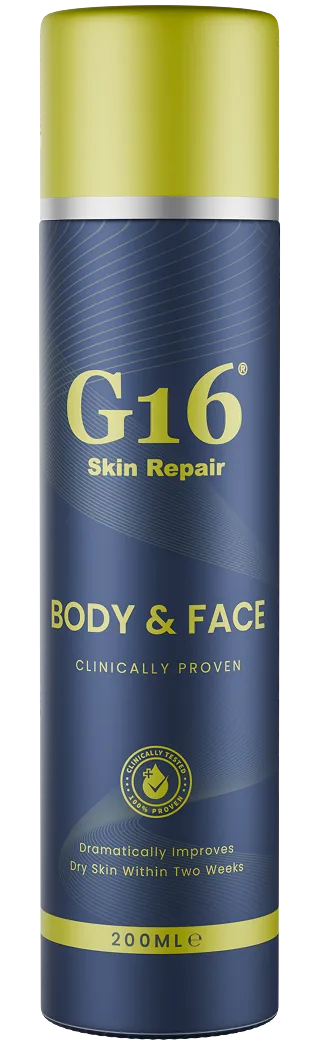
G16 Skin Repair Lotion is a cosmetic moisturiser. Patch test on a small area before first use, keep it away from the eyes and mucous membranes, and keep it out of reach of children. If your skin is broken, bleeding or infected, or if it gets worse rather than better, speak to a GP or a dermatologist.
