



Skin thickens for a reason, and in most cases the reason is protective. Repeated pressure, friction or rubbing tells the skin to reinforce itself, so it lays down extra layers of the tough outer material, keratin. The medical name for that thickening is hyperkeratosis, which simply means too much keratin. It is a description of what the skin is doing, not a diagnosis of why.
Working out the why is what decides whether you should remove it, leave it alone, or have it looked at.
The three broad causes
1. Pressure and friction
Calluses on the feet and hands, thickening on the elbows from leaning, thickened skin along a waistband or under a strap. The skin is doing its job. Remove the pressure and it gradually reverses.
2. A shedding problem
The skin makes cells at a normal rate but fails to release the old ones, so they accumulate. This is what happens in ichthyosis and in some chronic dry skin. Unlike friction thickening, there is nothing to remove the cause of, because the cause is how the skin behaves.
3. An underlying condition
Psoriasis produces thickened well-defined plaques. Lichen simplex chronicus is thickening from chronic scratching. Acanthosis nigricans produces velvety dark thickening in the folds and is associated with insulin resistance. Warts are thickening driven by a virus. Each needs its own treatment.
| Pattern | Where | Points to |
|---|---|---|
| Firm, yellowish, broad | Soles, heels, palms | Callus from pressure |
| Small, deep, painful when pinched | Toes, ball of foot | Corn |
| Raised plaques, silvery scale, well-defined | Elbows, knees, scalp | Psoriasis |
| Velvety, darkened, in folds | Neck, armpits, groin | Acanthosis nigricans |
| Leathery with exaggerated skin lines | Anywhere reachable | Chronic scratching |
| Fine to plate-like scale, lifelong | Shins, outer arms | Ichthyosis |
| Rough, with tiny dark dots, tender | Sole, finger | Wart |
Before removing anything, ask what it is protecting. A callus under a bony prominence is load-bearing. Taking it away entirely, particularly on a foot, can leave the skin beneath vulnerable and blistering. Reducing it and fixing the pressure is better than removing it and carrying on as before.
The safety point that matters most
Anyone with diabetes, peripheral neuropathy or poor circulation should not treat thickened skin on the feet themselves. Reduced sensation means damage can go unnoticed, and reduced circulation means it heals slowly. What starts as trimming a callus can become a serious ulcer. Foot care in that situation belongs with a podiatrist, and that is not excessive caution.
What helps ordinary thickening
- Deal with the cause. Better-fitting shoes, cushioning, gloves, stopping leaning. Without this, anything you remove simply rebuilds.
- Soften first. Soaking makes keratin considerably easier to reduce and reduces the temptation to be forceful.
- Keratolytics. Urea at higher strengths, salicylic acid, glycolic and lactic acid loosen the bonds holding the thickened layer together so it comes away gradually. Gradual is better than dramatic.
- Gentle mechanical reduction, such as a foot file on damp skin after soaking, used lightly and regularly rather than heavily and occasionally.
- Moisturise consistently, because thickened skin cracks when it is dry, and cracks are how infection gets in.
- Never cut it with a blade at home. This is how people end up in trouble.
Corns and calluses are not the same thing
They get used interchangeably and they behave differently, which matters because the approach differs.
| Callus | Corn | |
|---|---|---|
| Size and shape | Broad, diffuse, no clear border | Small, well-defined, with a central core |
| Where | Heels, balls of the feet, palms | Toes, between toes, pressure points |
| Pain | Usually painless | Often painful, especially pinched from the sides |
| Cause | Spread pressure and friction | Concentrated pressure on a small area |
| Approach | Reduce gradually, fix the pressure | Assess properly; the core needs care to remove |
A useful discriminator: squeezing from the sides hurts more with a corn, whereas pressing straight down hurts more with a wart. Calluses generally do not hurt at all, and when one does it is worth asking what is underneath it.
Where G16 fits, and where it does not
G16 Skin Repair uses glycolic and lactic acid to loosen accumulated dead skin so it lifts away, with aloe vera, glycerin, panthenol, vitamin E and shea butter hydrating underneath. That makes it relevant to thickening that comes from build-up: dry, scaly, rough thickened skin on elbows, knees, shins, hands and feet, and the thickening that accompanies ichthyosis.
Used twice daily, the process starts in the first week, there is usually a flakier phase around day five to seven as loosened material comes away, and a visible difference typically appears within the first two weeks. The full course is 28 days, and genuinely thick, long-standing areas can take up to about six weeks. Thick skin is at the slower end of that range by definition.
Where it is not the right tool: warts, which are viral and need treatment aimed at the virus. Psoriasis, which is inflammatory. Acanthosis nigricans, where the skin sign is secondary to something metabolic. Corns, which are focal pressure lesions best assessed properly. Skin that is cracked open, bleeding or infected. And feet in anyone with diabetes, neuropathy or circulatory problems, which should be professionally managed.
When to see a doctor or podiatrist
- Any thickened skin on the feet if you have diabetes, neuropathy or poor circulation. This is the important one.
- Thickening that is painful, cracked, bleeding, or showing signs of infection.
- Velvety darkened thickening in the neck, armpits or groin, which should prompt a metabolic check.
- A thickened area that is growing, changing, ulcerating or failing to heal.
- Well-defined plaques with silvery scale, suggesting psoriasis.
- Thickening with tiny dark dots that is tender to squeeze from the sides, suggesting a wart.
- Rapidly developing thickening in an adult with no mechanical explanation.
Common questions
It means thickening of the outer layer of skin through excess keratin, the tough protein that layer is made of. It is a description rather than a diagnosis, so the useful question is always what is driving it. The three broad answers are pressure and friction, a shedding problem where cells accumulate, or an underlying skin or metabolic condition.
No. Cutting with a blade at home is how minor problems become infections, and it is easy to go deeper than intended into skin that has no clear boundary. Soften by soaking, reduce gradually with a file or a keratolytic, and address the pressure causing it. If you have diabetes, neuropathy or poor circulation, do not treat your feet yourself at all: see a podiatrist.
Because removing it does not remove the reason for it. If the thickening is a response to pressure or friction, the skin rebuilds as soon as it is exposed to the same force again, which is why footwear and habits matter more than any product. If the cause is a shedding problem such as ichthyosis, the tendency is constitutional, so it is managed continuously rather than fixed once.
Usually not, and it is often protective. It matters more in two situations. In anyone with diabetes or reduced sensation in the feet, thickened areas can conceal damage underneath and become ulcers. And occasionally thickening signals something else worth knowing about, such as velvety darkening in the folds pointing to insulin resistance, or a persistent thickened patch that is growing or not healing and needs assessment.
The product behind this guide
G16 Skin Repair is a glycolic and lactic acid body lotion for built-up, scaly and thickened skin.
200ml. Made in the UK. 21 day money back guarantee.
Ichthyosis treatment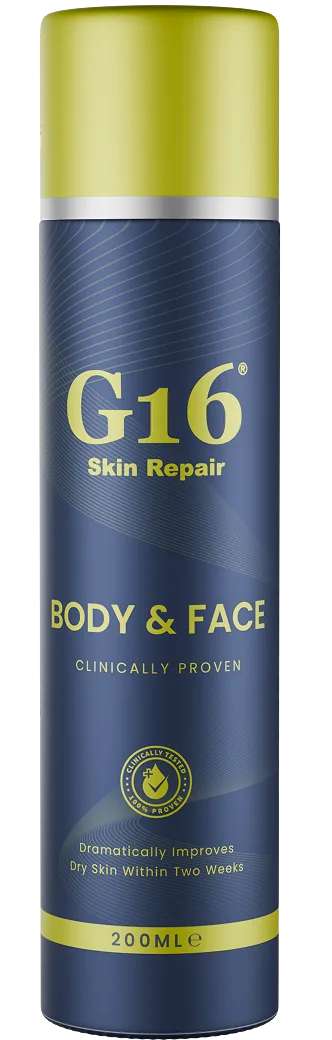
G16 Skin Repair Lotion is a cosmetic moisturiser. Patch test on a small area before first use, keep it away from the eyes and mucous membranes, and keep it out of reach of children. If your skin is broken, bleeding or infected, or if it gets worse rather than better, speak to a GP or a dermatologist.
