


Dry skin can be genetic. The commonest inherited cause is a change in the filaggrin gene, which weakens the skin barrier and is behind ichthyosis vulgaris, and other forms such as X-linked ichthyosis are also passed down in families. But a lot of dry skin is not genetic at all: it comes from age, weather, washing habits and other health conditions. Inherited dry skin can be managed well, but it cannot be cured.
If a parent, brother or sister has always had dry, rough or scaly skin and you do too, it is reasonable to wonder whether it runs in the family. Often it does. Sometimes, though, a family simply shares the same hard water, the same hot baths and the same soap.
How genes affect the skin barrier
The outer layer of skin is a wall of flattened dead cells held together by fats and proteins. It has to keep water in and shed dead cells at a steady rate. Several genes control how that wall is built and how cells are released. When one of them does not work properly, the skin either loses water too easily, holds on to dead cells for too long, or both.
Filaggrin
Filaggrin is a protein that helps pack keratin tightly in the outer skin cells. As it breaks down, it also produces the skin's natural moisturising factor, a mix of substances that hold water in the surface layer. People who inherit a faulty copy of the filaggrin gene make less of it, so their barrier is leakier and their skin holds less water.
Filaggrin gene changes are common. Roughly one in ten people of European descent carries one. Carrying two faulty copies usually produces more obvious scaling.
Ichthyosis vulgaris
Ichthyosis vulgaris is the commonest inherited form of ichthyosis and is caused by filaggrin gene changes. It usually appears in early childhood as fine, white or grey scale, often on the shins and backs of the arms, with skin creases such as the inner elbows usually spared. Extra palm lines and keratosis pilaris are common alongside it.
It is inherited in a way that means one affected parent can pass it on, and it tends to be worse in winter and better in warm, humid weather. It often eases somewhat with age. The guide on ichthyosis vulgaris treatment covers how it is managed day to day.
X-linked ichthyosis
X-linked ichthyosis is caused by a change in the STS gene on the X chromosome. Because boys have only one X chromosome, it affects males almost exclusively. Mothers are usually carriers with normal or near-normal skin, and each son of a carrier mother has a one in two chance of being affected. Affected fathers cannot pass it to sons, but all their daughters will be carriers.
The scale is typically darker and larger than in ichthyosis vulgaris, often brown or grey, and commonly affects the neck, trunk and limbs. More detail is in the guide to X-linked ichthyosis.
| Type | Gene involved | How it is inherited | Typical pattern |
|---|---|---|---|
| Filaggrin dry skin | Filaggrin | One faulty copy from either parent | Generally dry, rough skin, often with eczema |
| Ichthyosis vulgaris | Filaggrin | From either parent; two copies usually more severe | Fine pale scale on shins and arms, from childhood |
| X-linked ichthyosis | STS | Carrier mother to son | Darker, larger scale, neck and trunk, males |
| Rarer inherited ichthyoses | Several different genes | Often both parents silent carriers | Usually present at birth, more severe, specialist care |
Is ichthyosis hereditary?
Almost always, yes. Ichthyosis vulgaris and X-linked ichthyosis are both inherited, and the rarer forms are genetic too, though in those both parents may be unaffected carriers, so it can appear with no family history at all. Occasionally a gene change happens for the first time in a child.
There is also acquired ichthyosis, which develops in adulthood and is not inherited. It can be linked to an underactive thyroid, kidney disease, certain medicines, or other illnesses, so new scaling in an adult should always be checked by a GP.
The link with eczema, asthma and hay fever
Filaggrin changes are one of the strongest known genetic risk factors for atopic eczema. A leaky barrier lets irritants and allergens in more easily, which seems to make the immune system more reactive. That is why dry skin, eczema, asthma and hay fever so often cluster in the same families, and why people with ichthyosis vulgaris frequently have eczema as well. Carrying it does not guarantee eczema.
Genetics or shared environment?
Families share more than genes. Some clues:
- Points to genetics: dry or scaly skin since early childhood, a fairly fixed pattern such as scale on the shins, extra lines on the palms, keratosis pilaris, and relatives with the same pattern even when they live in different places.
- Points to environment: dryness that started in adulthood, clear seasonal swings with near-normal skin in summer, a link to very hot showers, hard water, harsh soaps or wet work, and improvement when those change.
A simple test. Change the habits first: shorter, cooler showers, a soap substitute, and moisturiser on damp skin twice a day for three to four weeks. If the skin returns close to normal, environment was doing most of the work. If it softens but the scale keeps returning, an inherited shedding problem is more likely.
When dry skin is not genetic
Most dry skin in adults is acquired. Common causes include ageing, cold weather and central heating, frequent washing, irritant soaps and detergents, and certain jobs. Health conditions such as an underactive thyroid, diabetes and kidney disease can also dry the skin, as can some medicines, including diuretics and retinoids. The guide to what causes dry skin covers these in more detail.
Managing inherited dry skin
There is no cure for genetic dry skin, but a consistent routine can make it look and feel close to normal for much of the year.
- Protect the barrier. Lukewarm water, a soap substitute, and patting dry.
- Moisturise twice daily, ideally on damp skin. A plain pharmacy emollient is the foundation and, for mild cases, may be all you need.
- Add a keratolytic where scale builds up. Urea, lactic acid or glycolic acid loosen retained dead skin so it lifts away.
- Keep going. Because the cause is lifelong, the skin drifts back when the routine stops.
Where G16 fits, and where it does not
G16 Skin Repair Lotion is a light, non-greasy body lotion with glycolic acid as its second ingredient and lactic acid behind it, plus aloe vera, glycerin, panthenol, allantoin, vitamin E and shea butter. The AHAs loosen built-up dead skin so it lifts away while the other ingredients hydrate underneath. That makes it a reasonable option for managing the scaly, rough build-up of ichthyosis vulgaris, X-linked ichthyosis and keratosis pilaris on intact skin. It does not change the underlying genetics.
Use it twice daily, left on as long as possible. A flakier phase around day five to seven is common, and a visible difference typically appears within two weeks. The full course is 28 days, or up to about six weeks for long-standing thick scale. Patch test first and use sunscreen on exposed areas.
It is not for broken, cracked, inflamed or infected skin, and acid lotions are not for babies or infants without medical advice. It is also the most expensive option compared with pharmacy creams, and many people with mild inherited dry skin do well on a plain emollient or urea cream alone.
When to see a GP
- Dry, scaly skin in a baby or young child. Ask a GP or health visitor.
- Ichthyosis-like scaling that appears for the first time in adulthood.
- Dry skin alongside tiredness, weight change or feeling cold, which may suggest a thyroid problem.
- Skin that is red, itchy, weeping or cracked, which may be eczema.
- Scaling that is severe, widespread or not improving after a few weeks of a good routine.
- Questions about passing a condition on. A GP can refer you to a dermatologist or genetics service.
Common questions
It can be. Changes in the filaggrin gene are common and cause a tendency to dry skin, and inherited conditions such as ichthyosis vulgaris and X-linked ichthyosis run in families. Plenty of dry skin is not inherited, though, and comes from age, weather, washing habits or health conditions.
Nearly all ichthyosis is genetic. Ichthyosis vulgaris can pass from either parent, X-linked ichthyosis passes from carrier mothers to sons, and rarer forms can appear when both parents are silent carriers. Acquired ichthyosis in adults is the exception and should be checked by a GP.
No. The underlying gene change stays for life. But with daily moisturising, a gentle washing routine and a keratolytic such as urea or an AHA where scale builds up, inherited dry skin can be managed well enough to look and feel close to normal much of the time.
It depends on the type. Ichthyosis vulgaris often passes from one affected parent. With X-linked ichthyosis, sons of carrier mothers have a one in two chance. Rarer types follow other patterns. A GP can refer you to a genetics service for specific advice.
Families often share the same habits and surroundings: hard water, hot baths, the same soaps, similar jobs. If dryness improves a lot when those change, environment is the main factor. Lifelong scaling with a fixed pattern points more towards an inherited cause.
The product behind this guide
G16 Skin Repair is a glycolic and lactic acid body lotion for built-up, scaly and thickened skin.
200ml. Made in the UK. 21 day money back guarantee.
Ichthyosis treatment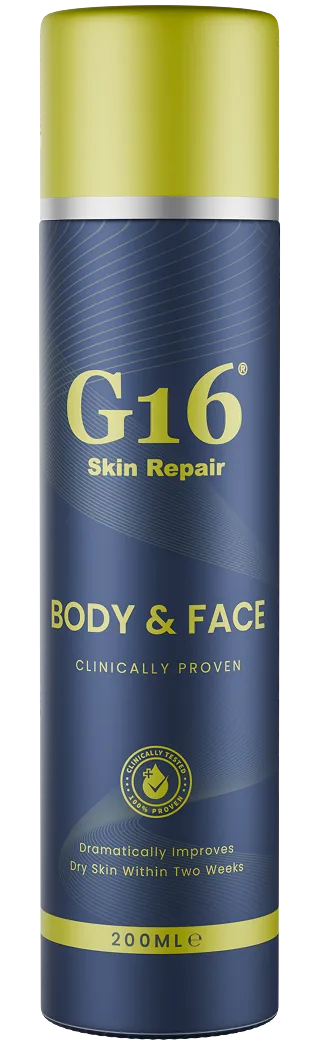
G16 Skin Repair Lotion is a cosmetic moisturiser. Patch test on a small area before first use, keep it away from the eyes and mucous membranes, and keep it out of reach of children. If your skin is broken, bleeding or infected, or if it gets worse rather than better, speak to a GP or a dermatologist.
