



Urea cream is one of the most effective and least expensive things you can put on dry skin, and the strength on the tube decides what it does. At 5 to 10 per cent it mainly draws water into the skin and holds it there; at 20 per cent and above it also softens and loosens thickened, built-up skin. For most people with ordinary dry skin, a pharmacy urea cream is the sensible first thing to try.
The trick is matching the strength to the area. A cream that suits rough heels will often be too much for the face, and a gentle body lotion will barely touch a thick callus.
What urea actually does
Urea is a natural part of the skin's own moisturising factor, the mix of small molecules in the outer layer that keeps it supple. Dry skin tends to have less of it. Adding urea back works in two ways depending on the concentration.
As a humectant
At lower strengths urea attracts water and helps the outer layer hold onto it. The skin feels softer, less tight and less rough. This is the main effect at 5 to 10 per cent.
As a keratolytic
At higher strengths urea also loosens the bonds between dead cells and breaks down keratin, the tough protein in the outer layer. That is why 20 to 40 per cent creams are used on hard skin on the feet rather than on the face.
| Strength | Main effect | Typical use |
|---|---|---|
| 5% | Hydrating, gentle | Face, body, everyday dryness, sensitive areas |
| 10% | Hydrating, mildly smoothing | Body, hands, dry shins, rough patches |
| 20% | Hydrating and softening hard skin | Feet, elbows, knees, very rough areas |
| 25% | Clearly keratolytic | Heels and hard skin on the soles |
| 40% | Strongly keratolytic | Small areas of very thick skin, thickened nails, short-term use |
Well-known UK examples include Eucerin UreaRepair, Flexitol and Balneum, each sold in several strengths. Check the pack, because formulations change and the same brand name can cover very different products.
Choosing a strength by body area
- Face: stay at 5 per cent or a face product formulated with urea. Facial skin is thinner and more reactive, and higher strengths are more likely to sting or irritate. Keep it away from the eyes and lips.
- Body, arms and legs: 5 to 10 per cent is the usual choice. It is enough to make dry shins and arms more comfortable and can be used once or twice a day long term.
- Hands: 5 to 10 per cent for general dryness. Rough, thickened palms may tolerate more, but cracked fingertips will not.
- Elbows and knees: 10 to 20 per cent, as these areas tend to build up thicker, rougher skin.
- Heels and soles: 20 to 25 per cent is where most foot creams sit. Our cracked heels guide covers the full foot routine.
- Very thick, localised areas: 40 per cent is a specialist strength for small areas and short courses, not a general moisturiser.
Start lower than you think you need. A 10 per cent cream used twice a day, every day, will usually do more than a 40 per cent cream used occasionally and abandoned because it stung. Consistency beats strength for ordinary dry skin.
Why urea can sting
Urea is generally well tolerated on intact skin, but it commonly stings on skin that is cracked, broken, inflamed or freshly shaved. The higher the strength, the more likely this is. A brief tingle on very dry skin that settles within a minute or two is common. Burning that persists, redness, or spreading irritation is a sign to stop.
- Avoid applying it to open cracks, cuts or raw patches until they have closed.
- On sore, inflamed skin, a plain bland emollient is usually the better choice until things settle.
- Patch test a new product on a small area first, especially at 20 per cent and above.
- Children's skin is more sensitive. Ask a pharmacist or GP before using higher strengths on a child, and do not use urea or acid creams on babies without medical advice.
Urea compared with AHA lotions
Alpha hydroxy acids (AHAs), such as glycolic and lactic acid, are the other common active in creams for rough skin. They overlap with urea, but they work differently.
| Urea cream | AHA lotion | |
|---|---|---|
| How it works | Draws in water; at high strengths softens keratin | Loosens the bonds between dead cells so they shed |
| Best at | Comfort, hydration, softening hard skin | Lifting built-up dead skin and scale |
| Texture | Cream to ointment, can be heavy | Often a lighter lotion |
| Sun sensitivity | Not a known issue | Increases sun sensitivity, use sunscreen |
| Cost and availability | Low, any pharmacy | Varies, some harder to find in the UK |
| Sensible first try for | Ordinary dry skin, rough feet | Scale or build-up that urea has not shifted |
Lactic acid is itself part of the skin's natural moisturising factor, so it hydrates as well as exfoliates. Glycolic acid is the smallest AHA. AmLactin, an American brand, uses lactic acid as ammonium lactate, and its classic Daily Moisturizing Lotion is 12 per cent, though UK stock is inconsistent. Our comparison of dry skin creams sets the options side by side.
Using urea and acids together
Plenty of people use both, and they can work well as a pair, because one releases the build-up and the other keeps the skin underneath comfortable. A few rules make it go smoothly:
- Introduce one product at a time. Give each a week or two on its own so you know which one is responsible if your skin reacts.
- Split them by time of day or area rather than layering both at once at the start. For example, the acid lotion in the evening and urea in the morning, or acid on the shins and urea on the heels.
- Watch for irritation. Two actives on the same patch of skin add up. If it stings, reddens or feels raw, drop back to one.
- Use sunscreen on exposed areas while using any AHA.
- Keep both off broken or cracked skin.
Where G16 fits, and where it does not
G16 Skin Repair is an AHA lotion rather than a urea cream. Glycolic acid is the second ingredient after water, with lactic acid behind it, to loosen built-up dead skin so it lifts away, while aloe vera, glycerin, panthenol, allantoin, vitamin E and shea butter hydrate underneath.
If you simply have dry skin, try a urea cream first. It is cheaper, sold everywhere and often all you need. G16 is the most expensive of the products we compare, and it is aimed at the situation where a urea cream has been used properly and visible scale or rough, thickened build-up keeps coming back. In that case the process starts in the first week, there is usually a flakier phase around day five to seven, a visible difference typically appears within the first two weeks, and the full course is 28 days. Many people keep a urea cream for comfort alongside it.
Where it does not belong: the face around the eyes, skin that is cracked, broken or infected, and babies. Patch test first, and remember that AHAs increase sun sensitivity.
When to see a GP or pharmacist
- Dry skin that has not improved after two to four weeks of consistent moisturising.
- Skin that is red, hot, weeping, crusted or very itchy, which may be eczema, dermatitis or infection rather than simple dryness.
- Cracks that bleed, will not close or show signs of infection.
- Any foot problem if you have diabetes, neuropathy or poor circulation. See a GP or podiatrist rather than using strong urea creams yourself.
- Widespread dry, scaly skin appearing for the first time in adulthood with no obvious reason.
- Dry skin in a baby or young child.
Common questions
For general dry skin on the body, 5 to 10 per cent is usually right. It hydrates well and is gentle enough for daily long-term use. Save 20 to 25 per cent for hard skin on the heels, elbows and knees, and 40 per cent for small, very thick areas. On the face, stick to 5 per cent or a product made for facial skin.
Yes, at a low strength. Several brands make facial creams with around 5 per cent urea. Avoid higher-strength foot or body creams on the face, keep it away from the eyes and lips, and stop if it stings or causes redness that does not settle.
Usually because the skin barrier is damaged: cracks, small cuts, inflammation or recent shaving. Higher strengths sting more. A short tingle on very dry skin is common, but persistent burning or redness means you should stop, switch to a bland emollient until the skin settles, and try a lower strength later.
Neither is better across the board. Urea is excellent for hydration and comfort and is the cheaper first try for ordinary dry skin. AHA lotions such as glycolic and lactic acid are better at lifting built-up dead skin and scale. Many people use urea for comfort and an AHA where build-up keeps returning.
Yes, many people do. Introduce them one at a time, then use them at different times of day or on different areas before trying them together. If the skin becomes sore or red, go back to one product. Use sunscreen on exposed skin while using glycolic acid, and keep both off cracked or broken skin.
The product behind this guide
G16 Skin Repair is a glycolic and lactic acid body lotion for built-up, scaly and thickened skin.
200ml. Made in the UK. 21 day money back guarantee.
Dry skin treatment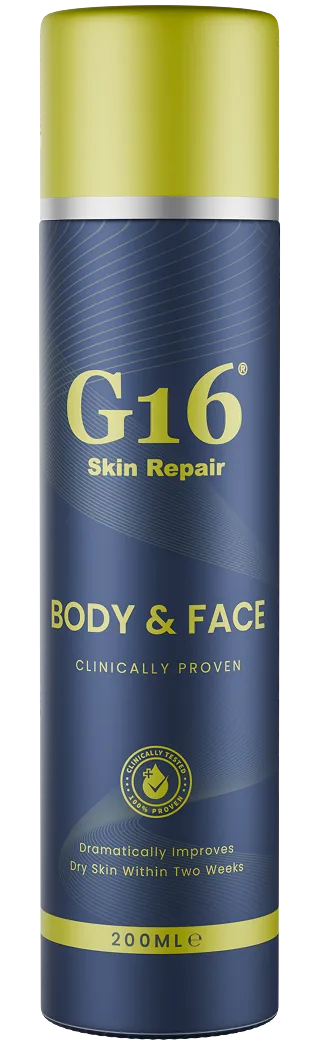
G16 Skin Repair Lotion is a cosmetic moisturiser. Patch test on a small area before first use, keep it away from the eyes and mucous membranes, and keep it out of reach of children. If your skin is broken, bleeding or infected, or if it gets worse rather than better, speak to a GP or a dermatologist.
