



Dry skin on the hands is usually caused by water, soap, sanitiser, cold weather and detergents stripping away the oils that keep the skin's barrier intact. The fix is to reduce that exposure where you can, wear gloves for wet and dirty work, and use a hand cream after every wash rather than once a day. If the skin becomes red, itchy, blistered or split despite that, it is often hand dermatitis and worth showing to a pharmacist or GP.
Hands take more punishment than any other skin on the body. They are washed many times a day, exposed to weather, and used for almost every job. The backs of the hands also have fewer oil glands than the face, and the palms have none at all, so they dry out quickly and recover slowly.
What causes dry hands
Frequent handwashing
Every wash removes some of the natural oils and lipids that hold water in the skin. Hot water and harsh soaps make this worse. Washing is important, so the answer is to wash with lukewarm water and a gentle soap or soap substitute, then moisturise straight afterwards.
Hand sanitiser
Alcohol gels are less drying than repeated washing for many people, but they still dehydrate the skin and sting badly on cracks. Gels that contain glycerin or other moisturisers are gentler.
Cold, wind and central heating
Cold air holds little moisture, wind strips it from the skin surface, and indoor heating dries the air further. This is why hands are often at their worst between November and March.
Detergents, solvents and work exposure
Washing-up liquid, cleaning products, solvents, cement, hair products and constant wet work are common culprits. Hairdressers, cleaners, healthcare workers, caterers, mechanics and builders are particularly prone.
Hand dermatitis
When the barrier is damaged for long enough, the skin becomes inflamed. This is hand dermatitis, also called hand eczema. It can be irritant, from repeated exposure to water and chemicals, or allergic, from a reaction to something specific such as rubber, fragrance, preservatives or nickel. People with a history of eczema, asthma or hay fever are more likely to develop it.
| What you see | Where | Likely cause |
|---|---|---|
| Tight, rough, slightly flaky | Backs of hands | Simple dryness from washing and weather |
| Splits that open with movement | Knuckles, fingertips, around nails | Dry skin losing flexibility |
| Red, sore, itchy, worse after wet work | Backs of hands, between fingers | Irritant contact dermatitis |
| Itchy rash where a product or glove touches | Matches the contact area | Allergic contact dermatitis |
| Tiny itchy blisters | Sides of fingers, palms | A form of hand eczema |
| Thick, rough, hardened skin | Palms, fingers, backs of hands | Friction, manual work, or build-up |
Cracked knuckles and fingertips
Knuckles and fingertips crack because the skin there stretches every time you bend a finger. Once it is dry and stiff, it splits instead of stretching. Fingertip splits are especially painful and slow to close because they are used constantly.
- Apply a thick, plain emollient or ointment to cracks several times a day, and especially at night.
- Wear cotton gloves over a generous layer of ointment overnight for a few nights.
- Avoid picking at loose skin around the nails, which turns small splits into deeper ones.
- Keep acid-based or high-strength urea products off open cracks, as they will sting and can irritate further.
- Watch for redness spreading from a crack, pus, warmth or increasing pain, which suggest infection.
The timing matters more than the cream. Moisturiser applied within a minute or two of washing, while the skin is still slightly damp, locks in water far better than the same cream applied an hour later. Keep a tube by every sink you use.
A glove and handwashing routine that works
- Wash with lukewarm water, not hot, and use a mild soap or soap substitute.
- Pat dry, including between the fingers, rather than rubbing.
- Moisturise straight away, every time. Hands are washed so often that a single morning application wears off within the hour.
- Wear gloves for wet work and cleaning. Use waterproof gloves with a thin cotton liner, and take them off as soon as the job is done, since sweat inside gloves also irritates.
- Wear warm gloves outdoors in cold or windy weather.
- Use an ointment overnight, under cotton gloves if your hands are very dry.
- Remove rings for washing and wet work, because water and soap trapped underneath are a common trigger.
Choosing a hand cream
The best hand cream is one you will actually use ten times a day. Most people end up with two: something light for daytime and something heavier for night.
- Daytime: a fast-absorbing cream that does not leave hands greasy. Glycerin, urea at 5 to 10 per cent and ceramides are all useful.
- Night and cracked skin: a thicker cream or ointment, such as one based on petroleum jelly or paraffin.
- Sensitive or dermatitis-prone skin: fragrance-free and as simple as possible. A pharmacist can suggest an emollient.
- Rough, thickened skin: a product that loosens build-up, such as a higher-strength urea or an AHA lotion, used only where the skin is intact.
For itching that comes with dry skin, see our itchy dry skin guide, and for thick hard skin from friction, see the guide to thickened skin.
When it is contact dermatitis
Ordinary dry hands improve within a couple of weeks of regular moisturising and fewer washes. If they do not, or if the skin becomes red, itchy, swollen, blistered or weepy, it is more likely to be dermatitis. Clues include a rash that matches where a glove, product or tool touches, flare-ups after particular jobs, and improvement on holidays or days off work.
A GP can confirm it and may prescribe a steroid cream for a short period to settle the inflammation. If an allergy is suspected, you may be referred for patch testing to identify the trigger. If your work is the cause, tell your employer or occupational health, as there are often practical changes that make a big difference.
Where G16 fits, and where it does not
G16 Skin Repair is a light, non-greasy body lotion led by glycolic acid, with lactic acid behind it, to loosen built-up dead skin so it lifts away, while aloe vera, glycerin, panthenol, allantoin, vitamin E and shea butter hydrate underneath. On the hands it is suitable for rough, thickened build-up on the backs of the hands and the palms, where plain hand cream softens the skin for an hour but the rough layer stays put.
Because hands are washed so often, the lotion is removed far sooner than on the legs or arms. Reapply after washing, and get the most from it by applying a generous layer at night. The process starts in the first week, there is usually a flakier phase around day five to seven, and a visible difference typically appears within the first two weeks.
Where it does not belong: on cracked knuckles, split fingertips, or any skin that is broken, raw, inflamed or infected. Those need a bland emollient first. Patch test before use, keep it away from the eyes, and use sunscreen on the backs of the hands, as AHAs increase sun sensitivity. For simple dry hands, an ordinary hand cream used after every wash is the sensible place to start.
When to see a GP
- Hands that are red, itchy, blistered or weeping, or not improving after two weeks of careful moisturising.
- Cracks that bleed, keep reopening, or show signs of infection such as pus, spreading redness or warmth.
- A rash that seems linked to a particular product, glove, metal or job.
- Dry hands that are stopping you working or sleeping.
- Thick, scaly, well-defined patches, or changes to the nails, which may suggest psoriasis.
- Dry, rough hands in a baby or young child. Ask a GP or health visitor.
Common questions
Usually because it is being washed off faster than it is being put on. Apply after every wash, not just once a day, and use something heavier at night. If hands stay red, itchy or sore despite that, it may be hand dermatitis, which often needs a short course of prescribed treatment to settle.
Keep the skin supple so it stretches rather than splits. Moisturise after every wash, wear gloves for wet work and in the cold, and put a thick ointment on overnight under cotton gloves. Avoid stinging products such as acids and strong urea on open cracks until they have closed.
It can. Alcohol dehydrates the skin, though for many people sanitiser is less drying than washing with soap many times a day. Choose a gel that contains glycerin or other moisturisers, and use a hand cream regularly. If sanitiser stings, the skin barrier is already damaged.
Dry skin feels tight and rough and improves within a couple of weeks of regular moisturising. Dermatitis is usually red, itchy and sore, may blister or weep, and often flares after particular jobs or products. If moisturising is not enough, see a pharmacist or GP.
On rough, thickened skin that is intact, yes. AHA lotions and higher-strength urea can loosen build-up on the palms and backs of the hands. Do not use them on cracked, broken or inflamed skin, patch test first, and use sunscreen on the backs of the hands while using an AHA.
The product behind this guide
G16 Skin Repair is a glycolic and lactic acid body lotion for built-up, scaly and thickened skin.
200ml. Made in the UK. 21 day money back guarantee.
Dry skin treatment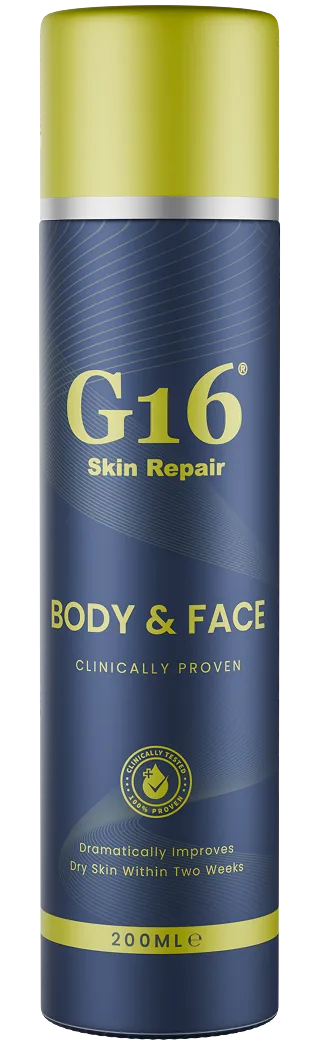
G16 Skin Repair Lotion is a cosmetic moisturiser. Patch test on a small area before first use, keep it away from the eyes and mucous membranes, and keep it out of reach of children. If your skin is broken, bleeding or infected, or if it gets worse rather than better, speak to a GP or a dermatologist.
