


Ichthyosis is a scaling condition where dead skin builds up because it does not shed properly, while eczema is an inflammatory condition that makes skin red, itchy and sore. Ichthyosis is mostly about scale and is usually only mildly itchy; eczema is mostly about itch and inflammation, with dryness as a side effect. The two are easy to confuse, and they often turn up in the same person.
People searching for "fish scale eczema" are usually looking at dry, scaly skin and wondering which of the two it is. This page sets out the practical differences, why they so often overlap, and why the answer changes what you should put on your skin.
The quick way to tell them apart
No single sign settles it, but taken together these clues point fairly clearly one way or the other.
| Ichthyosis | Eczema | |
|---|---|---|
| Main feature | Scale: dry, fine to plate-like, often in a regular pattern | Itch and inflammation: red, sore, rough patches |
| Itch | Usually mild or absent | Often intense, especially at night |
| Redness | Usually little or none in the common forms | Common, though it can look darker or greyish on brown and black skin |
| Where | Shins and outer arms (extensor surfaces), back; creases usually spared | In older children and adults, inside elbows and behind knees (flexures), neck, hands, face |
| Age of onset | Early childhood, or from birth in rarer types | Often in the first year or two, but can start at any age |
| Course | Constant, worse in winter | Flares and settles, triggered by irritants, heat, stress or allergens |
| Family history | Often a parent or sibling with the same scaly skin | Often eczema, asthma or hay fever in the family |
| Weeping or crusting | Not typical | Can happen in flares, and when infected |
The creases are the biggest clue
Ichthyosis vulgaris classically leaves the inside of the elbows and the backs of the knees clear, while scaling the shins and outer arms. Eczema in older children and adults tends to do the opposite and settle into exactly those creases. If your scale is on the fronts of your shins and your elbow creases are smooth, that leans towards ichthyosis. If the creases are red, itchy and thickened from scratching, that leans towards eczema.
Itch versus scale
Ask yourself which bothers you more. People with ichthyosis mostly mind how the skin looks and feels: rough, tight, visibly scaly. People with eczema mostly mind the itch, which can disturb sleep and lead to scratching until the skin breaks.
Why they so often occur together
This is the part that confuses many people, because the honest answer can be "both". Ichthyosis vulgaris is usually caused by changes in the gene for filaggrin, a protein that helps the outer layer of skin hold together and hold water. The same filaggrin changes are one of the best-known genetic risk factors for atopic eczema.
The result is that a significant share of people with ichthyosis vulgaris also have atopic eczema, and many people with eczema have some features of ichthyosis, such as very lined palms, keratosis pilaris on the upper arms, or fine scale on the shins. The weak barrier lets water out and irritants in, which suits both conditions.
Both can be true at once. It is common to have scaly ichthyosis on the shins and itchy eczema in the elbow creases at the same time. That matters because each area may need something different: the scale needs loosening and hydrating, while inflamed eczema needs calming first, and products that help one can irritate the other.
Other links include the atopic tendency in general: people with ichthyosis vulgaris are more likely to have hay fever and asthma, the same family of conditions that travels with eczema. Our ichthyosis vulgaris guide covers that type in more detail.
Why the distinction matters for what you put on your skin
The two conditions are cared for differently, so getting the label roughly right saves a lot of trial and error.
- Eczema care is about calming and protecting. Plenty of plain, bland emollient, soap substitutes, avoiding triggers, and, during flares, treatments a GP or pharmacist may recommend, such as topical steroids. Fragrance, harsh exfoliants and acids can sting inflamed eczema and make it worse.
- Ichthyosis care is about loosening the build-up and hydrating. Emollients still matter, but because the problem is retained scale, many people also need a keratolytic: an ingredient that loosens the bonds between dead cells, such as urea, lactic acid, glycolic acid or salicylic acid.
- Where both are present, people often use a plain emollient everywhere and keep any scale-loosening product to the scaly, non-inflamed areas, leaving the red, itchy patches to the advice of their GP.
A common trap is treating ichthyosis as if it were eczema: years of bland emollients that soften the scale for a few hours without shifting it. The opposite trap is putting an exfoliating acid on what is actually inflamed eczema, which tends to sting and flare.
Other conditions that can look similar
- Ordinary dry skin (xerosis), which is common with age and in winter, and usually settles with moisturiser alone.
- Asteatotic eczema, a cracked, crazy-paving dryness on older people's shins, sometimes described as crocodile skin.
- Psoriasis, which forms well-defined raised plaques with silvery scale, often on the elbows, knees and scalp.
- Fungal infection, which can cause a scaly patch with a clearer edge, sometimes ring-shaped.
- Acquired ichthyosis, scale that appears for the first time in adulthood and can be linked to thyroid, kidney or other conditions, so it always needs a doctor.
Where G16 fits, and where it does not
G16 Skin Repair is a light, non-greasy lotion made for the scale build-up side of the problem. Glycolic acid, the second ingredient after water, and lactic acid loosen built-up dead skin so it lifts away, while aloe vera, glycerin, panthenol, allantoin, vitamin E and shea butter hydrate underneath. It is used twice daily, with a visible difference typically within the first two weeks and a full course of 28 days. Ichthyosis is genetic, so this manages how the skin looks and feels rather than changing the condition.
It is an acid lotion, so where skin is inflamed, red, weeping, broken or cracked, have it seen by a GP or pharmacist first rather than putting G16 on it. Patch test before wider use, keep it away from the eyes, and use sunscreen on exposed areas. If your scale is mild, a cheaper urea cream from a pharmacy is a sensible first try, and our cream comparison sets out the options fairly.
When to see a GP
- You are not sure whether it is ichthyosis, eczema or something else, and home care is not helping.
- Itch is keeping you or your child awake, or skin is being scratched until it bleeds.
- Skin is weeping, crusting, hot, very painful, or has yellow crusts or pus, which can mean infection.
- Painful clustered blisters or punched-out sores appear on eczema, which needs urgent same-day care.
- Scaly skin has appeared for the first time in adulthood with no childhood history.
- A baby or child has scaly or inflamed skin that has not been diagnosed.
- Over-the-counter emollients have been used properly for several weeks with no improvement.
Common questions
No. Fish scale skin is the everyday name for ichthyosis, which is a separate condition caused by skin not shedding properly. Eczema is an inflammatory condition. They are closely linked, though, because the filaggrin gene changes behind ichthyosis vulgaris also raise the risk of atopic eczema, so many people have both.
Usually much less. The common forms of ichthyosis can feel tight or mildly itchy, especially in winter, but the main complaint is scale. Eczema tends to itch intensely, often enough to disturb sleep. If scaly skin is very itchy, it is worth asking a GP whether eczema is also present.
Yes, and it is common. A typical pattern is fine scale on the shins and outer arms from ichthyosis vulgaris, with itchy red eczema in the elbow and knee creases. Each area may need different care, so it helps to have a GP confirm what is going on.
Mostly by looking and asking. A GP will check where the scale or rash is, whether the creases are affected, how itchy it is, when it started and whether relatives have similar skin. Lined palms and keratosis pilaris point towards ichthyosis vulgaris. Tests are rarely needed for the common forms, though a dermatologist may arrange them for rarer types.
Ask your GP or pharmacist first. Inflamed, broken or weeping skin should be assessed before you put any exfoliating acid on it, because acids can sting and irritate. Scale-loosening lotions are aimed at built-up scale on skin that is intact and not inflamed.
The product behind this guide
G16 Skin Repair is a glycolic and lactic acid body lotion for built-up, scaly and thickened skin.
200ml. Made in the UK. 21 day money back guarantee.
Ichthyosis treatment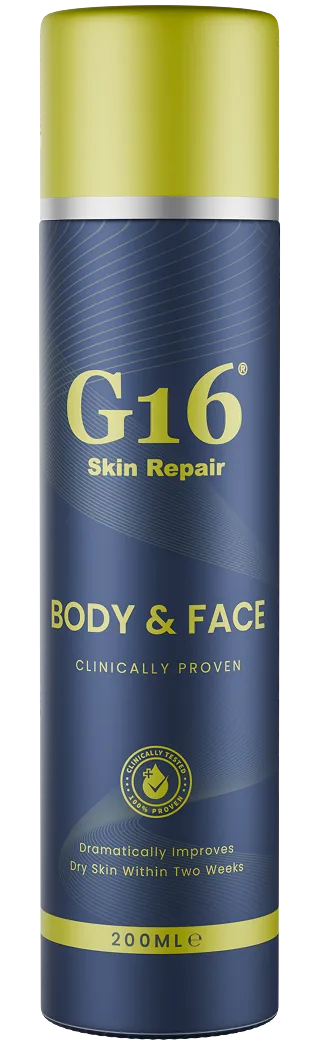
G16 Skin Repair Lotion is a cosmetic moisturiser. Patch test on a small area before first use, keep it away from the eyes and mucous membranes, and keep it out of reach of children. If your skin is broken, bleeding or infected, or if it gets worse rather than better, speak to a GP or a dermatologist.
