



Inherited ichthyosis does not go away: it is a lifelong genetic tendency, although it often changes with the seasons and with age, and many people find it much easier to live with once they have a routine. Acquired ichthyosis, which appears for the first time in adulthood, is different, because it is driven by something else in the body and can settle when that underlying cause is found and treated.
So the honest answer depends on which kind you have. For most people with ichthyosis, the aim is not to make it disappear but to keep the scale under control so the skin looks and feels as comfortable as possible, day to day.
Inherited ichthyosis: lifelong, but not fixed
Most ichthyosis is inherited. The genes involved affect how the outer layer of skin is built and shed, and that does not change over a lifetime. No cream, diet or supplement alters the genetics. What does change is how the skin behaves from season to season and decade to decade.
Seasons
Almost everyone with ichthyosis notices it is worse in winter and better in summer. Warm, humid air helps the skin hold water and shed more normally, while cold weather and indoor heating dry it out. Some people look almost clear in a hot summer and then find the scale returns by November. That is the condition following the weather, not going away and coming back.
Age
Ichthyosis vulgaris, the commonest form, usually appears in early childhood. For some people it becomes milder in adulthood, and a few find it barely noticeable for long stretches. Others see little change. X-linked ichthyosis, which mainly affects males, tends to persist but often improves in summer. Rarer forms such as lamellar ichthyosis are generally more severe and lifelong, and are best managed with a dermatologist. Harlequin ichthyosis is a rare and serious form that needs specialist hospital care from birth.
| Type | Does it go away? | What usually happens |
|---|---|---|
| Ichthyosis vulgaris | No, but it can ease | Better in summer, may become milder in adulthood for some |
| X-linked ichthyosis | No | Persists, often improves in warm weather |
| Lamellar and other congenital forms | No | Lifelong, needs ongoing specialist-guided care |
| Harlequin ichthyosis | No | Managed in specialist hospital care |
| Acquired ichthyosis | Often, if the cause is treated | Can settle once the underlying condition or medication is addressed |
Our guides to ichthyosis vulgaris and X-linked ichthyosis cover each type in more detail.
Acquired ichthyosis: the kind that can resolve
Ichthyosis that appears for the first time in an adult, with no history since childhood and no family pattern, is called acquired ichthyosis. It looks similar to ichthyosis vulgaris but is a sign of something else going on. Recognised causes include:
- An underactive thyroid.
- Certain medications, including some cholesterol-lowering drugs and some cancer treatments.
- Kidney disease and other long-term illnesses.
- Poor nutrition or malabsorption.
- Some infections and inflammatory conditions, such as HIV and sarcoidosis.
- Rarely, some cancers, particularly lymphoma.
When the cause is identified and managed, the skin often improves or returns to normal. That is why new scaling in adulthood should always be checked by a GP before you start treating the skin itself.
"It went away" usually means "it is well controlled". With inherited ichthyosis, if you stop the routine the scale gradually rebuilds, typically over a few weeks. That is not failure. It is how the condition works, and it is why daily care matters more than any single product.
A daily management routine
The standard approach is simple: hydrate the skin, gently remove scale, and protect the barrier, every day.
- Bathe or shower daily in warm, not hot, water, using a soap substitute rather than soap. Soaking for a while softens scale and makes it easier to remove.
- Remove loosened scale gently while the skin is soft, with a soft cloth or sponge. Do not scrub hard or pick.
- Apply an emollient straight after, while the skin is still damp, to hold in water.
- Use a product that loosens scale on the areas that build up most. Urea, lactic acid, glycolic acid and salicylic acid creams are the usual options, and a GP or dermatologist can prescribe some of them.
- Moisturise again later in the day, and more often in winter.
- Protect from cold, wind and dry indoor air, and consider a humidifier if your home is very dry.
For babies and young children, all of this should be guided by a GP, health visitor or dermatologist. Acid-based lotions are not for infants without medical advice.
Maintenance once the scale is under control
Getting scale down is the harder part. Keeping it down usually takes less effort than people expect, as long as it is not abandoned.
- Drop the frequency, not the habit. Many people reduce their scale-loosening product from twice a day to once a day, or every other day, and keep a plain emollient going daily.
- Step up before winter. Increase moisturising and scale care in autumn rather than waiting for the skin to deteriorate.
- Focus on the stubborn areas. Shins, outer arms and the back often need more attention than the rest.
- Notice the early signs. Roughness, tightness or itching usually come back before visible scale. That is the moment to increase care again.
Realistic expectations
It helps to be clear about what is possible. With a consistent routine, many people with mild to moderate ichthyosis get to a point where their skin feels comfortable and the scale is hard for others to notice, particularly in summer. More severe forms usually improve with good care but remain visible. In every inherited form, the tendency stays, so the routine is ongoing.
Ichthyosis is not contagious, not caused by poor hygiene, and not your fault. Support organisations such as the Ichthyosis Support Group in the UK offer practical advice and contact with others who live with it. For a broader overview, see our guide to fish scale skin.
Where G16 fits, and where it does not
G16 Skin Repair was developed around built-up scale. Glycolic acid, the second ingredient after water, and lactic acid loosen the accumulated dead layer so it lifts away, while aloe vera, glycerin, panthenol, allantoin, vitamin E and shea butter hydrate the skin underneath. It is a light, non-greasy lotion, which makes twice-daily use easier to keep up.
Used twice daily and left on as long as possible, there is usually a flakier phase around day five to seven as loosened scale comes away, and a visible difference typically appears within the first two weeks. The full course is 28 days, and heavy, long-standing scale can take up to about six weeks. After that, many people drop to once a day or less to maintain the result.
It is important to be plain about the limits. G16 changes how the skin looks and feels while you use it. It does not change the genetics, and the scale returns gradually if you stop. It is not for babies, for harlequin ichthyosis, or for skin that is cracked, broken or infected. Patch test first, avoid the eyes, and use sunscreen on exposed areas because AHAs increase sun sensitivity.
When to see a GP
- Dry, scaly skin appearing for the first time in adulthood, especially with weight loss, tiredness, night sweats or other new symptoms.
- Scaling that started after beginning a new medication.
- Any baby or young child with scaly skin, or a baby born with tight, shiny or very thick skin.
- Skin that is cracked, bleeding, infected, very red or painful.
- Scale that is not responding to a consistent routine, for a referral to a dermatologist and prescription options.
- Overheating or difficulty sweating, which can occur in some forms of ichthyosis.
Common questions
Inherited ichthyosis cannot be cured, because it is genetic. It can be managed well with daily bathing, emollients and scale-loosening creams, and many people keep it under good control. Acquired ichthyosis, which appears in adulthood, can resolve if the underlying cause, such as an underactive thyroid or a medication, is treated.
Sometimes. Ichthyosis vulgaris becomes milder in adulthood for some people, though not for everyone. Other inherited forms, including X-linked and lamellar ichthyosis, tend to persist throughout life. Almost all forms vary with the seasons, so how the skin looks in any one month is not the whole picture.
Warm, humid air helps the skin hold water and shed more normally, so scale builds up less. Cold weather, wind and central heating do the opposite. That is why many people step up their routine in autumn, before the skin gets worse.
With inherited ichthyosis, yes, gradually. Creams manage the skin while you use them but do not change the underlying tendency. Once scale is under control, most people can reduce how often they use a scale-loosening product, but keeping some routine going is what keeps it from rebuilding.
It is ichthyosis-like scaling that appears for the first time in adulthood, rather than from childhood. It is linked to an underlying cause such as an underactive thyroid, certain medications, kidney disease or, rarely, lymphoma. It should always be checked by a GP, and it often improves when the cause is treated.
The product behind this guide
G16 Skin Repair is a glycolic and lactic acid body lotion for built-up, scaly and thickened skin.
200ml. Made in the UK. 21 day money back guarantee.
Ichthyosis treatment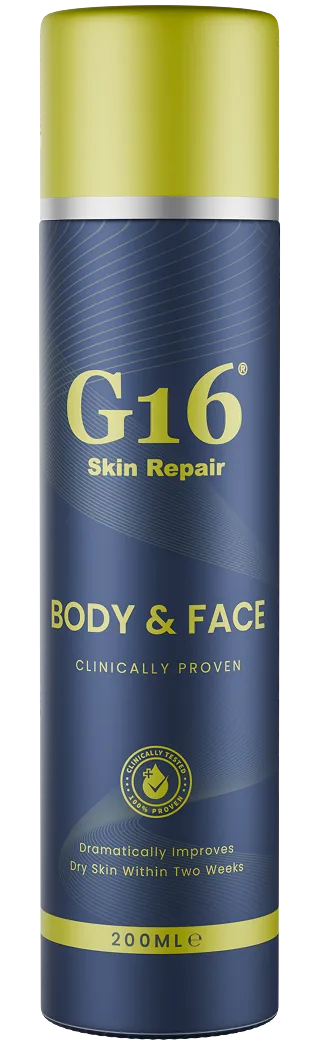
G16 Skin Repair Lotion is a cosmetic moisturiser. Patch test on a small area before first use, keep it away from the eyes and mucous membranes, and keep it out of reach of children. If your skin is broken, bleeding or infected, or if it gets worse rather than better, speak to a GP or a dermatologist.
