


There is a particular embarrassment about feet, which is why cracked heels go untreated for years and then get hidden in socks all summer. They are also one of the more fixable things on this site, once you know why moisturising alone was never going to do it.
Heels crack because thick skin cannot stretch. Every step spreads the heel pad sideways under your body weight. Supple skin flexes and absorbs that. Skin that has thickened and dried out cannot, so the strain has to go somewhere, and it goes into a split at the rim.
The sequence that leads to a crack
- Pressure and friction thicken the skin at the heel rim. This is a callus, and it is protective.
- The thickened skin dries out. Thick keratin holds water poorly, and the heel has very few oil glands to begin with.
- Dry, thick skin loses its flexibility.
- Body weight spreads the heel pad on each step and the inflexible rim splits.
- The split widens with every step, and because it opens and closes constantly it struggles to heal.
The medical name for the splits is heel fissures. Shallow ones are a cosmetic nuisance. Deep ones reach living tissue, bleed, hurt with every step and can become infected.
What makes it more likely
- Open-backed shoes. Sandals, flip-flops, mules and clogs let the heel pad spread outward with nothing holding it. The single most common contributor.
- Standing for long periods, particularly on hard floors.
- Carrying more weight, which increases the spreading force through the heel.
- Dry skin generally, whether from the climate, hot baths, ageing or a condition like ichthyosis.
- Age. The fat pad under the heel thins, so the skin takes more of the load.
- Medical causes: an underactive thyroid, diabetes, and less commonly psoriasis or a fungal infection of the sole, which can look like ordinary dry cracking but will not respond to moisturiser.
What actually works
1. Deal with the thickness, not just the dryness
This is the step most people skip, and it is the one that changes the outcome. The rim of hard skin has to come down before the heel can flex properly again.
- Soak for ten minutes, then use a foot file on damp skin with light pressure. Once or twice a week, not daily, and stop well before it feels sore.
- Use something keratolytic to loosen the build-up between filings: urea at 25 to 40 per cent, or an alpha hydroxy acid such as glycolic or lactic acid.
- Do not attack it. Hard filing removes protection faster than the skin can safely lose it, and the skin tends to respond by rebuilding thicker.
2. Keep the new skin supple
Once the thickness is coming down, the aim is skin that bends. Apply a rich emollient last thing at night, when the foot is not about to be walked on, and put cotton socks on over the top to keep it in place and stop it wiping off on the sheets.
3. Change the shoes
Closed-in shoes with a firm heel counter stop the heel pad spreading. If you live in sandals through the summer, expect the cracking to be seasonal and plan around it. Cushioned insoles help with the impact; silicone heel cups are inexpensive and specifically designed to hold the pad together.
4. Protect an open crack while it heals
A crack that opens and closes with every step cannot close over. A liquid bandage or a hydrocolloid dressing holds the edges together long enough for the skin to bridge the gap. This makes a real difference and is often the missing piece.
If you have diabetes, treat cracked heels as a medical matter, not a cosmetic one. A heel fissure is an open wound on a foot that may have reduced sensation and reduced blood supply, which is exactly how serious foot infections start. No filing, no acids, no home surgery. See your podiatry team.
Why moisturiser alone often fails
Ordinary foot creams are built around occlusives and humectants. They add water and slow its loss, which is genuinely useful and makes the skin feel better within minutes. But water does not dissolve the bonds holding a thick callus together. You end up with a well-hydrated thick heel, which is still too rigid to flex, so it still splits.
The people who tell you they have tried everything and nothing works have usually tried five products from the same category. Adding one that does a different job is what breaks the pattern.
Where G16 fits, and where it does not
G16 Skin Repair is a keratolytic lotion, glycolic acid alongside lactic acid, so on heels its role is the first step: loosening the built-up hard skin so it can come away, with aloe vera, glycerin, panthenol and shea butter hydrating underneath as it does.
It suits thickened, hard, dry heels and the rough rim that precedes cracking. Applied to clean dry skin, ideally at night, and left on rather than washed off.
It is not for a heel that is already split open and bleeding. Acid on an open fissure stings badly and does not help it close. Get the crack healed first with a hydrocolloid dressing or liquid bandage, then work on the thickness so it does not happen again.
And a plain 25 per cent urea heel balm from a pharmacy is cheaper and works on the same principle. G16 makes more sense if you have thickened or scaly skin elsewhere too and would rather use one lotion everywhere.
When to see someone
- You have diabetes, neuropathy or circulation problems, in which case any heel crack warrants a professional.
- The crack is bleeding, or shows signs of infection: heat, swelling, spreading redness, pus.
- It hurts enough to change how you walk.
- It has not improved after several weeks of proper care.
- The sole is also itchy, peeling between the toes, or the nails are thickened and discoloured, which suggests a fungal cause needing antifungal treatment rather than a moisturiser.
Common questions
Open-backed shoes. Sandals and flip-flops let the heel pad spread sideways on every step with nothing holding it in, which is the mechanical force that splits the rim. Add more barefoot time and dry air, and summer beats winter for cracked heels in most people.
No. Once or twice a week on damp skin, with light pressure. Daily filing removes protection faster than the skin can safely replace it, and the usual response is that the skin rebuilds thicker. Let a softening product do most of the work between filings.
They do shed a dramatic amount of skin, because they are a high concentration of acids under occlusion. What they do not do is change the pressure that thickened the heel, so the callus rebuilds. They are also too aggressive for anyone with diabetes or already-cracked skin. Impressive to watch, not a solution.
Sometimes. An underactive thyroid causes notably dry, thickened skin. Diabetes affects both sweating and circulation in the feet. Psoriasis and a fungal infection of the sole can both look like ordinary cracking but need entirely different treatment. If good foot care is not shifting it, that is worth a GP appointment.
A shallow crack protected with a dressing usually closes within one to two weeks. Bringing the underlying thickness down takes longer, generally four to six weeks of daily treatment with gentle weekly filing. Skipping the second part is why cracks recur every year.
The product behind this guide
G16 Skin Repair is a glycolic and lactic acid body lotion for built-up, scaly and thickened skin.
200ml. Made in the UK. 21 day money back guarantee.
Dry skin treatment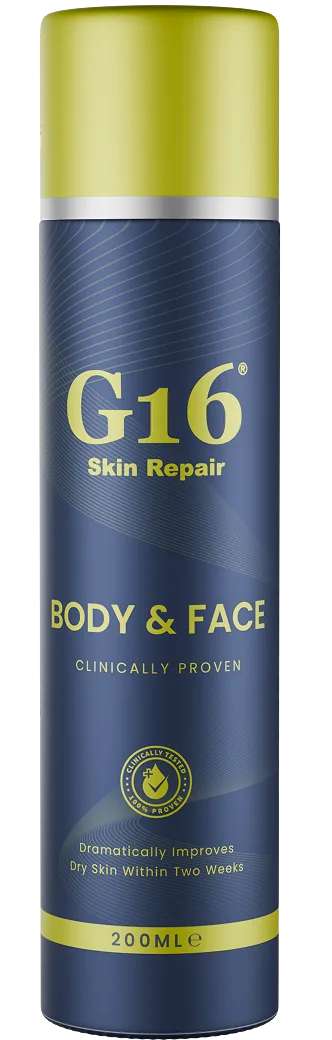
G16 Skin Repair Lotion is a cosmetic moisturiser. Patch test on a small area before first use, keep it away from the eyes and mucous membranes, and keep it out of reach of children. If your skin is broken, bleeding or infected, or if it gets worse rather than better, speak to a GP or a dermatologist.
