


Glycolic acid is the smaller molecule, so it penetrates faster and exfoliates more strongly, while lactic acid is slightly larger, gentler, and also acts as a humectant that draws water into the skin. For rough, flaky or built-up body skin, glycolic acid tends to do more to the dead layer, and lactic acid tends to be kinder to dry or sensitive skin; many body lotions use both to get some of each.
Both are alpha hydroxy acids, or AHAs, and both work the same basic way. The differences are of degree, and they decide which suits your skin, or whether a combination makes more sense.
How AHAs work on body skin
The outer layer of skin is made of flattened dead cells held together by bonds that normally loosen in an orderly way, so cells shed invisibly. When that shedding slows down, cells build up into roughness, flaking or visible scale. AHAs weaken those bonds in the outermost layer, so the excess dead skin comes away more evenly. They do not burn the skin off, and at body-lotion strengths they act gradually over days and weeks rather than in a single application.
Body skin is thicker than facial skin, and the problems people use AHAs for on the body, such as rough shins, bumpy arms or heavy scale, usually involve more build-up. That is why body products are typically left on rather than rinsed off.
Lactic acid vs glycolic acid, side by side
| Glycolic acid | Lactic acid | |
|---|---|---|
| Source | Originally from sugar cane, now usually made synthetically | Originally from milk, now usually made by fermentation |
| Molecule size | The smallest AHA | Slightly larger |
| Penetration | Faster and deeper into the dead layer | Slower and more even |
| Exfoliating strength | Stronger at the same concentration | Milder |
| Hydration | Some, mainly by helping skin hold water once smoother | Also a humectant, and part of the skin's own natural moisturising factor |
| Irritation and sting | More likely, especially on dry or broken skin | Less likely, often better tolerated |
| Sun sensitivity | Yes | Yes |
| Common body uses | Built-up scale, thickened rough skin | Dry, rough skin, keratosis pilaris, sensitive skin |
The four differences that matter
1. Molecule size and penetration
Glycolic acid is the smallest alpha hydroxy acid. A smaller molecule moves into the layer of dead cells more quickly, which is why glycolic acid generally has a stronger effect at the same concentration. Lactic acid is a little larger, so it works more slowly and more evenly across the surface.
2. Hydration
This is lactic acid's distinctive advantage. As well as exfoliating, it is a humectant, meaning it attracts and holds water, and lactate is one of the components of the skin's own natural moisturising factor. That makes lactic acid well suited to skin that is both rough and dry, which describes most body skin people want to exfoliate.
3. Irritation
Because glycolic acid penetrates faster, it is more likely to sting or redden, particularly on very dry skin, after shaving, or on skin that is already irritated. Lactic acid is usually the gentler of the two. Either can irritate if the product is too strong, too acidic, or applied to damaged skin.
4. Strength and pH
The percentage on the pack is only half the story. How acidic the product is, its pH, affects how much of the acid is active, which is why two lotions with the same percentage can feel quite different. Over-the-counter body lotions are formulated for regular leave-on use, while much higher strengths, such as chemical peels, belong in a clinic. If a product does not state its percentage, its position on the ingredient list is a rough guide: near the top means a meaningful amount.
Sun sensitivity applies to both. All AHAs make skin more sensitive to the sun because they thin the protective layer of dead cells, and the effect lasts for a while after you stop. Use sunscreen on any treated skin that will be exposed, and consider applying acid lotions in the evening.
Which should you choose?
- Dry, slightly rough skin, or skin that stings easily: lactic acid is the gentler, more hydrating start.
- Keratosis pilaris bumps: lactic acid is commonly used, and salicylic acid is another option because it works into the follicle. See our guide on how to get rid of keratosis pilaris.
- Thickened, rough or scaly skin with visible build-up: glycolic acid's stronger action on the dead layer tends to make more difference.
- Both at once, which is common: a lotion combining the two gives glycolic acid's strength with lactic acid's hydration, often more comfortably than a strong glycolic product alone.
Using two separate acid products at the same time on the same skin raises the risk of irritation. If you want both acids, a single product that already combines them is usually easier to get right.
Where G16 fits, and where it does not
G16 Skin Repair combines both acids on purpose. Glycolic acid is the second ingredient after water, so it leads the work of loosening built-up dead skin so it lifts away, and lactic acid follows, adding a gentler exfoliating action and drawing water into the skin. Aloe vera, glycerin, panthenol, allantoin, vitamin E and shea butter hydrate underneath. It is a light, non-greasy lotion in a 200ml bottle, made in the UK, and designed to stay on the skin, ideally for around ten hours.
It is aimed at heavy, built-up scale: rough, thickened or fish-scale patches on legs, arms and torso, including the scaling that comes with ichthyosis. Our guide to fish scale skin explains that pattern. Used twice daily, there is usually a flakier phase around day five to seven as loosened skin comes away, and a visible difference typically within the first two weeks. The full course is 28 days, after which many people drop to once a day or less.
Where it is not the right tool: for mild dryness, a cheaper urea cream or a gentle lactic acid lotion may be all you need, and G16 is not the cheapest option. Avoid the eyes, and do not use it on broken, cracked or infected skin. Patch test first, use sunscreen on exposed areas, and do not use acid lotions on babies or infants without medical advice. For a side-by-side with other products, see our comparison of dry skin creams.
When to see a GP
- A reaction to an acid product that causes blistering, swelling or redness that does not settle within a day or two of stopping.
- Scaly skin that has been present since childhood across large areas, which may be ichthyosis.
- Red, inflamed, weeping or cracked skin, or signs of infection such as heat, swelling or pus.
- Itching that disturbs sleep or does not settle with moisturising.
- A rough or scaly patch that is changing, bleeding or not healing.
- Any skin concern in a baby or young child: speak to your GP or health visitor before using acids.
Common questions
It depends on your skin. Glycolic acid exfoliates more strongly, which helps with thickened skin and visible build-up. Lactic acid is gentler and also hydrates, which suits dry or easily irritated skin. For rough, dry skin with some build-up, a lotion that combines both is often the most comfortable way to get a stronger effect.
At the same concentration and pH, generally yes. Glycolic acid is the smallest alpha hydroxy acid, so it penetrates the dead layer faster and has a stronger exfoliating effect. That also makes it more likely to sting. The overall strength of a product depends on its concentration and pH as well as which acid it uses.
Yes. Many body lotions combine them, pairing glycolic acid's stronger action with lactic acid's hydration. Layering two separate acid products on the same skin is more likely to irritate, so a single product that already contains both is usually simpler. Patch test first and use sunscreen on exposed treated skin.
Yes, it is one of the better-suited acids for dry skin because it is a humectant as well as an exfoliant, drawing water into the skin while it loosens dead cells. Lactate is also part of the skin's own natural moisturising factor. It is generally gentler than glycolic acid, though it can still sting on very dry or cracked skin.
Yes, both do, as all alpha hydroxy acids increase sun sensitivity. The effect continues for a while after you stop using them. Use sunscreen on any treated skin that will be exposed, which in summer usually means arms and legs, and consider applying acid lotions in the evening.
The product behind this guide
G16 Skin Repair is a glycolic and lactic acid body lotion for built-up, scaly and thickened skin.
200ml. Made in the UK. 21 day money back guarantee.
Dry skin treatment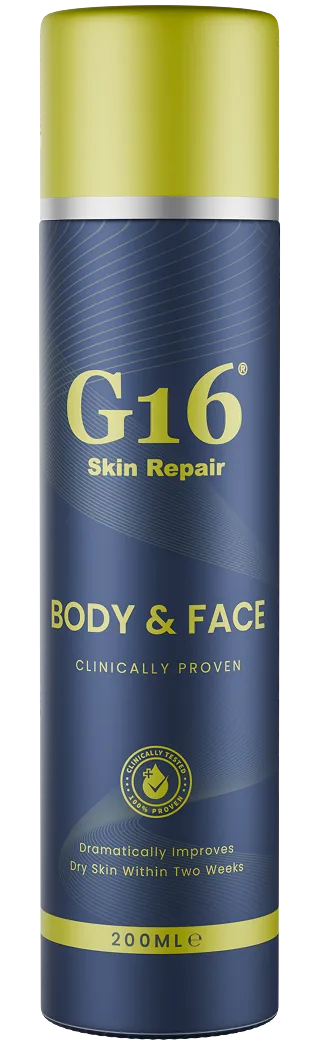
G16 Skin Repair Lotion is a cosmetic moisturiser. Patch test on a small area before first use, keep it away from the eyes and mucous membranes, and keep it out of reach of children. If your skin is broken, bleeding or infected, or if it gets worse rather than better, speak to a GP or a dermatologist.
