


AmLactin uses lactic acid, an alpha hydroxy acid that loosens the bonds between dead skin cells, while urea creams use urea, which mainly draws water into the skin and only loosens dead skin at higher strengths. For everyday dryness a low-strength urea cream is the cheaper, gentler first try; for rough, bumpy or flaky skin that needs actual exfoliation, an acid lotion such as AmLactin does a job that a 5 or 10 per cent urea cream does not.
Both ingredients occur naturally in the skin's own moisture system, both hydrate, and both can soften scale. The difference is in how hard each one works on the dead layer, how it feels, and who it suits.
How each one works
Lactic acid (ammonium lactate) in AmLactin
AmLactin is an American brand whose lotions are built around lactic acid, supplied as ammonium lactate. The classic Daily Moisturizing Lotion is 12 per cent. Lactic acid is an alpha hydroxy acid, or AHA. It weakens the "glue" holding dead cells together in the outer layer so they shed more evenly instead of piling up. Unusually for an acid, it is also a humectant, so it attracts water as it works. That combination is why lactic acid lotions are a long-standing choice for rough, dry body skin.
Urea in urea creams
Urea behaves differently depending on strength. At roughly 5 to 10 per cent it is mainly a humectant: it pulls water into the outer layer and holds it there, which makes dry skin feel softer and more comfortable. At roughly 20 to 40 per cent it also becomes keratolytic, meaning it breaks down keratin and softens thickened skin, which is why the strongest urea products are aimed at heels and calluses. Well-known UK examples include Eucerin UreaRepair, Flexitol and Balneum. Check the pack, because strengths vary across a range and formulations change.
| AmLactin (lactic acid) | Urea cream | |
|---|---|---|
| Type of ingredient | Alpha hydroxy acid that is also a humectant | Humectant that becomes keratolytic at high strength |
| Main job | Loosens dead cells so they shed, and hydrates | Holds water in the skin; softens keratin at 20 per cent and above |
| Typical strength | 12 per cent in the classic lotion | 5 to 10 per cent for daily use, 20 to 40 per cent for heels and thick areas |
| Feel | Lotion or cream; can sting on dry or freshly shaved skin | Cream to ointment; often heavier, usually less sting at low strength |
| Sun sensitivity | Yes, as with any AHA, so use sunscreen on exposed skin | Not usually a concern |
| UK availability | Inconsistent, usually imported | Any pharmacy or supermarket |
| Sensible first choice for | Rough, bumpy, flaky body skin | Everyday dryness, cracked heels, maintenance |
Which is stronger?
It depends on what you mean by strong. As an exfoliant, a 12 per cent lactic acid lotion does more to the dead layer than a 5 or 10 per cent urea cream, which is mostly hydrating. A 25 or 40 per cent urea product, on the other hand, is a serious softener of thick keratin, and on a callus or a cracked heel it may outperform a lactic acid lotion.
So the honest comparison is not one product against another, but one job against another:
- Dry, tight, uncomfortable skin with little visible scale: low-strength urea is usually enough.
- Rough, sandpapery or bumpy skin, flaking on the shins or arms: an AHA such as lactic acid tends to make the bigger visible difference.
- Thick, hard skin on heels and soles: high-strength urea is a well-established option. See our guide to cracked heels.
- Heavy, plate-like scale that keeps returning: this is where people often find a single ingredient softens the scale but does not shift it.
Stinging is not the same as working. Both lactic acid and higher-strength urea can sting on very dry, cracked or freshly shaved skin. A brief tingle is common. Burning, redness that lasts or broken skin is a reason to stop and let the skin settle, not to push through.
How they feel to use
Feel matters more than people expect, because the product you actually apply twice a day beats the better one you avoid. Low-strength urea creams range from light creams to rich, slightly greasy textures, and some people will not use them in the morning before getting dressed. Lactic acid lotions are often lighter, but the acid can sting, especially in the first few days on very dry skin.
Some people notice a faint smell from ammonium lactate products. Urea creams are generally low-odour. Neither is a reason to choose on its own, but both are worth knowing before you buy a large tub.
Can you use AmLactin and urea cream together?
Yes, and many people do. The two work by different routes, so they can complement each other. Common ways to combine them:
- Split by time of day: the acid lotion at night, when sun exposure is not an issue, and a low-strength urea cream in the morning for comfort.
- Split by area: lactic acid on rough arms and shins, high-strength urea on heels and soles.
- Split by phase: the acid to bring scale down, then urea to keep the skin comfortable once it is under control.
Layering both at once on the same patch, particularly at high strengths, increases the chance of stinging. Patch test any new combination first, and avoid broken skin.
Where G16 fits, and where it does not
G16 Skin Repair is an acid lotion like AmLactin rather than a urea cream, but it uses two AHAs instead of one. Glycolic acid, the smallest alpha hydroxy acid, is the second ingredient after water, with lactic acid behind it. Together they loosen built-up dead skin so it lifts away, while aloe vera, glycerin, panthenol, allantoin, vitamin E and shea butter hydrate underneath. It is a light, non-greasy 200ml lotion, made in the UK.
That makes it relevant to heavy, built-up scale: the rough, thickened or fish-scale patches on legs, arms and torso that urea softens but never quite shifts. Used twice daily and left on as long as possible, ideally around ten hours, there is usually a flakier phase around day five to seven as loosened skin comes away, and a visible difference typically within the first two weeks. The full course is 28 days, and long-standing thick areas can take up to about six weeks.
Where it is not the right tool: if your skin is simply dry, a urea cream from any pharmacy is cheaper and probably all you need, and G16 is the most expensive option here. It is not for broken, cracked or infected skin, and it increases sun sensitivity, so use sunscreen on exposed areas. Acid lotions, including G16, are not for babies or infants without medical advice. For a wider side-by-side, see our comparison of dry skin creams.
When to see a GP
- Dry, scaly skin that has lasted for years or since childhood, which may be a form of ichthyosis worth having diagnosed. Our guide to ichthyosis vulgaris explains more.
- Skin that is red, inflamed, weeping, cracked open or showing signs of infection.
- Itching that disturbs sleep or does not settle with regular moisturising.
- Thickened skin on the feet if you have diabetes, neuropathy or poor circulation: see a podiatrist rather than treating it yourself.
- New dryness or scaling in adulthood with no obvious cause, especially alongside tiredness, weight change or other symptoms.
- Any dry skin problem in a baby or young child: speak to your GP or health visitor first.
Common questions
Neither is better across the board. AmLactin's lactic acid exfoliates as well as hydrating, so it tends to do more for rough, bumpy or flaky body skin. A low-strength urea cream is gentler, cheaper and easier to buy in the UK, and is often all that ordinary dryness needs. High-strength urea is a strong softener for heels and calluses.
The classic AmLactin lotion is built around lactic acid as ammonium lactate, not urea. The brand has several products and formulations change, so check the ingredient list on the specific pack. If you want both ingredients, you can use a urea cream alongside an acid lotion, for example one in the morning and the other at night.
There is no exact equivalent because they work differently. As a rough guide, 5 to 10 per cent urea is mainly a moisturiser, while 20 per cent and above starts to soften keratin in a way that is closer to an exfoliant. A 12 per cent lactic acid lotion sits somewhere between: it hydrates like a humectant and also loosens dead cells like an acid.
Yes. Many people put the acid lotion on at night and a low-strength urea cream on in the morning, or use urea on heels and the acid on arms and legs. Layering both on the same patch at high strengths is more likely to sting, so patch test first, keep off broken skin, and use sunscreen on areas where you have applied an acid.
Both are commonly used for the rough bumps of keratosis pilaris. Lactic acid tends to make more visible difference to the roughness because it exfoliates, while urea mainly softens. Salicylic acid products are another common choice because they work into the pore. Whatever you use, keratosis pilaris returns when you stop, so the aim is a routine you can keep up.
The product behind this guide
G16 Skin Repair is a glycolic and lactic acid body lotion for built-up, scaly and thickened skin.
200ml. Made in the UK. 21 day money back guarantee.
Compare creams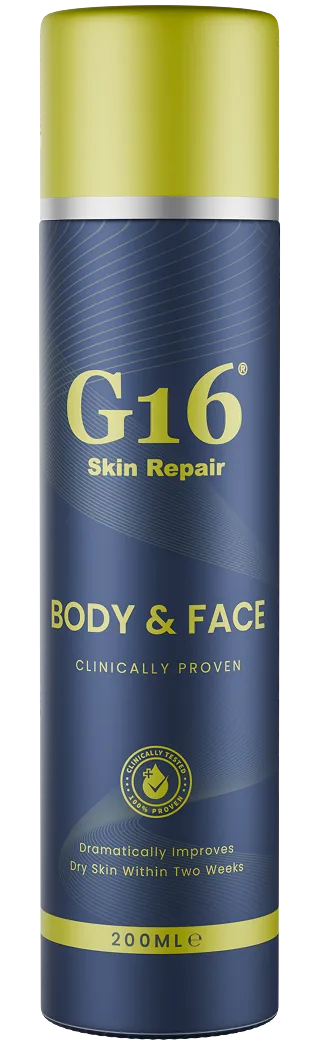
G16 Skin Repair Lotion is a cosmetic moisturiser. Patch test on a small area before first use, keep it away from the eyes and mucous membranes, and keep it out of reach of children. If your skin is broken, bleeding or infected, or if it gets worse rather than better, speak to a GP or a dermatologist.
