


The closest UK alternative to AmLactin is any body lotion that lists lactic acid or ammonium lactate high in its ingredients, and if you cannot find one, a urea cream from a pharmacy or an AHA body lotion with glycolic or lactic acid does a similar job. AmLactin itself is an American brand with inconsistent UK stock, usually imported, so it is often easier to buy by ingredient than by brand name.
What follows explains why AmLactin is hard to get here, what to look for on a UK label, and the main categories of alternative, from cheap pharmacy creams upwards.
Why AmLactin is hard to find in the UK
AmLactin is sold mainly in the United States, where it is a familiar pharmacy brand. In the UK it is not a regular high-street pharmacy line, so most of what you see for sale is imported by third-party sellers. That tends to mean:
- Inconsistent stock, with listings that appear and disappear.
- Import pricing and longer delivery times compared with products sold here directly.
- Uncertainty about what you are getting, since the brand has several products with different formulations, and labels and versions change.
None of that says anything bad about the product. It simply means that if you want the same kind of ingredient reliably, it helps to know what to look for.
What to look for on a UK label
The active ingredient in the classic AmLactin Daily Moisturizing Lotion is lactic acid, supplied as ammonium lactate, at 12 per cent. When you are reading UK packs, these are the ingredients that do a comparable job:
Lactic acid or ammonium lactate
The direct match. Lactic acid is an alpha hydroxy acid (AHA) that loosens the bonds between dead skin cells so they shed, and it is also a humectant, so it draws in water. On an ingredient list it may appear as lactic acid, ammonium lactate or sodium lactate. Sodium lactate is mainly used as a moisturising ingredient rather than an exfoliant.
Glycolic acid
The other common AHA, sometimes listed as hydroxyacetic acid. It is the smallest AHA molecule and is a strong exfoliant on built-up surface scale. Many AHA body lotions use glycolic and lactic acid together.
Urea
Not an acid, but a widely available alternative. At roughly 5 to 10 per cent it mainly hydrates; at roughly 20 to 40 per cent it also softens keratin. Look for the percentage on the front of the pack.
Position on the list matters. UK ingredient lists run from the highest amount to the lowest. An acid listed near the top, straight after water, is doing real work. One listed near the end, after the fragrance and preservatives, is present in a small amount and is unlikely to exfoliate much.
The main UK alternatives
| Type | Key ingredient | Best for | Where to buy |
|---|---|---|---|
| Low-strength urea cream | Urea 5 to 10 per cent | Everyday dryness, comfort, maintenance | Any pharmacy or supermarket |
| High-strength urea cream | Urea 20 to 40 per cent | Heels, soles, thick hard skin | Pharmacies |
| Urea plus lactic acid | Urea with lactic acid or lactate | Dry, rough skin wanting a gentle exfoliant | Pharmacies, some on prescription |
| AHA body lotion | Glycolic and/or lactic acid | Rough, flaky, built-up scale | Pharmacies, online, direct from brands |
| Salicylic acid cream | Salicylic acid (BHA) | Keratosis pilaris bumps | Any pharmacy |
1. Urea creams from pharmacies
The cheapest and easiest place to start. Eucerin UreaRepair, Flexitol and Balneum are familiar UK names, each with products at different strengths. For general dryness a 5 or 10 per cent cream is usually enough; for heels and calluses, the higher strengths make more difference. They do not exfoliate in the way lactic acid does at lower strengths, but many people find they are all they need.
2. Products combining urea and lactic acid
Some UK emollients combine urea with lactic acid or a lactate, aiming to hydrate and gently exfoliate in one product. Some are sold in pharmacies and some are also prescribed by GPs for very dry or scaly skin. Ask a pharmacist what is currently stocked, and check the label for both ingredients.
3. AHA body lotions
Body lotions led by glycolic acid, lactic acid or both are the closest in mechanism to AmLactin. They suit rough, flaky skin and visible scale better than a plain moisturiser. Quality varies widely, so use the label check above: is the acid near the top of the list, and is the product designed to stay on the skin rather than rinse off?
If keratosis pilaris bumps are your main concern, a salicylic acid cream is also worth considering, as it works into the follicle. Our guide to keratosis pilaris covers that in more detail.
Buying in other countries, including India
The same approach works anywhere AmLactin is hard to find, whether that is the UK, India or elsewhere. Read the ingredient list rather than relying on the brand: look for lactic acid or ammonium lactate, glycolic acid, or urea with its percentage, and check how high the active sits on the list. Brands and regulations differ by country, so a local pharmacist or dermatologist is the best guide to what is available and suitable.
Where G16 fits, and where it does not
G16 Skin Repair is a UK-made AHA body lotion that uses two acids rather than one. Glycolic acid is the second ingredient after water, with lactic acid behind it, so between them they loosen built-up dead skin so it lifts away. Aloe vera, glycerin, panthenol, allantoin, vitamin E and shea butter hydrate underneath. It is a light, non-greasy 200ml lotion, sold direct and on Amazon.co.uk, with a 21-day money-back guarantee when you buy direct.
It is aimed at heavy, built-up scale: the thickened, rough or fish-scale patches that urea creams soften but do not shift. Used twice daily and left on as long as possible, ideally around ten hours, there is usually a flakier phase around day five to seven and a visible difference typically within the first two weeks. The full course is 28 days.
Where it is not the right tool: if your skin is just dry, a pharmacy urea cream is much cheaper and is the sensible first try. G16 is the most expensive option here. It is not for broken, cracked or infected skin, it increases sun sensitivity so use sunscreen on exposed areas, and acid lotions are not for babies or infants without medical advice. See our comparison of dry skin creams for a side-by-side.
When to see a GP
- Very dry or scaly skin that has been present since childhood, which may be ichthyosis and is worth diagnosing. Some emollients for it are available on prescription.
- Skin that is red, inflamed, weeping, cracked or showing signs of infection.
- Itching that disturbs sleep or does not settle with moisturising.
- Thickened skin on the feet if you have diabetes, neuropathy or poor circulation: see a podiatrist.
- New, unexplained dryness or scaling in adulthood.
- Any dry skin problem in a baby or young child: speak to your GP or health visitor first.
Common questions
Sometimes, but not reliably. AmLactin is an American brand and is not a regular UK high-street pharmacy line, so most UK listings are imports from third-party sellers. Stock comes and goes and delivery can be slow. Buying by ingredient, lactic acid, glycolic acid or urea, is usually easier.
There is no single identical product, but anything with lactic acid or ammonium lactate high on the ingredient list works the same way. Urea creams from pharmacies are the cheapest alternative for general dryness, and AHA body lotions with glycolic or lactic acid are the closest in mechanism for rough or flaky skin.
Ammonium lactate is lactic acid combined with ammonium hydroxide, a way of using lactic acid in a lotion at a less acidic pH. It still delivers lactic acid's exfoliating and moisturising effect. On a label you may also see lactic acid on its own, or sodium lactate, which is mainly a moisturising ingredient.
For everyday dryness, often yes, and it is cheaper and easier to buy. Low-strength urea mainly hydrates, though, while lactic acid also exfoliates, so for rough, flaky or bumpy skin an acid lotion tends to make more visible difference. High-strength urea is a good option for heels and hard skin.
Use the same label check as in the UK: look for lactic acid or ammonium lactate, glycolic acid, or urea with its percentage, near the top of the ingredient list. Products and regulations differ by country, so a local pharmacist or dermatologist is the best person to suggest what is available and suitable for your skin.
The product behind this guide
G16 Skin Repair is a glycolic and lactic acid body lotion for built-up, scaly and thickened skin.
200ml. Made in the UK. 21 day money back guarantee.
Compare creams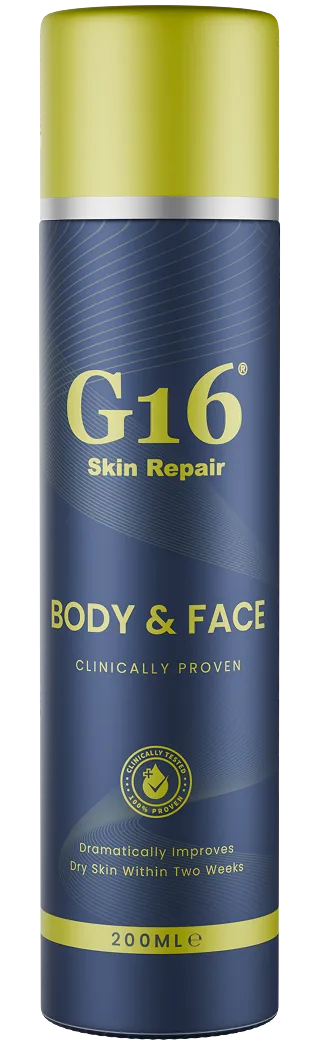
G16 Skin Repair Lotion is a cosmetic moisturiser. Patch test on a small area before first use, keep it away from the eyes and mucous membranes, and keep it out of reach of children. If your skin is broken, bleeding or infected, or if it gets worse rather than better, speak to a GP or a dermatologist.
