


If you have arrived here after seeing "xerosis" written on a letter, a prescription or a set of notes, the short answer is that it means dry skin. Nothing more alarming than that. Xerosis cutis is the same word with the Latin for skin attached, and asteatosis is another term you will occasionally see for it.
What it means clinically
Xerosis describes skin whose outer layer, the stratum corneum, holds too little water. Below roughly 10 per cent water content the layer stops being flexible, which produces the familiar picture: tightness, roughness, fine scaling, sometimes fissuring in a crazy-paving pattern, and often itch.
It is descriptive rather than explanatory. It tells you what the skin is doing, not why. The why is the useful part.
What causes it
Common and everyday
- Low humidity, particularly indoor heating in winter.
- Hot, long or frequent bathing.
- Soap and detergent-based cleansers.
- Ageing. Sebum production and natural moisturising factors both decline, and by the seventies xerosis is close to universal. In that context it is often called senile xerosis, which is an unfortunate name for something entirely normal.
Medical
- Hypothyroidism. One of the classic causes, alongside fatigue, cold intolerance and weight gain.
- Diabetes, which affects both skin hydration and sweating.
- Chronic kidney disease. Xerosis is very common in people on dialysis.
- Malnutrition, particularly deficiency in zinc or essential fatty acids.
- Medication: diuretics, statins, retinoids, some chemotherapy agents.
- Radiotherapy to the treated area.
Skin conditions that present with xerosis
- Atopic eczema, where dry skin is a defining feature rather than a complication.
- Ichthyosis vulgaris and other inherited ichthyoses.
- Psoriasis.
- Asteatotic eczema, sometimes called eczema craquelé, where the skin takes on a cracked crazy-paving appearance, usually on the lower legs of older adults. This is xerosis that has tipped into inflammation.
Xerosis and ichthyosis are not the same thing
This is the distinction that changes what you should do, and it gets blurred constantly.
| Xerosis | Ichthyosis | |
|---|---|---|
| What it is | A description: skin lacking water | A named group of conditions where skin does not shed properly |
| Cause | Usually environmental, age-related or secondary to illness | Usually genetic, present from childhood |
| Main problem | Water loss | Accumulation of dead cells into scale |
| Appearance | Tight, rough, fine flaking | Defined scale, often plate-like or fish-scale |
| Responds to | Emollients and reducing what strips it | Emollients plus something that loosens the build-up |
Why it matters. Xerosis is a water problem, so adding and holding water fixes it. Ichthyosis is a shedding problem, so adding water alone never quite works, because the scale is still there. If you have been told you have xerosis, have used good emollients faithfully, and the scaling persists, it is reasonable to ask whether there is an ichthyosis underneath.
How it is treated
- Remove what is stripping it. Cooler and shorter showers, a non-soap cleanser, pat dry.
- Emollients, generously and often. Within three minutes of bathing, at least twice daily. This is the mainstay of treatment and everything else is secondary to it.
- Raise the humidity if it is seasonal.
- Treat the cause if there is a medical one. Xerosis from an untreated thyroid problem improves when the thyroid is treated, and not much before.
- Add a keratolytic if scaling persists despite the above, which suggests build-up rather than simple dryness.
Where G16 fits, and where it does not
For straightforward xerosis, meaning skin that is tight and rough with no real scale to remove, G16 is not what you need and a plain emollient will serve you better and cost less. That is the honest answer for the majority of people who arrive at this word.
Where it becomes relevant is xerosis that has progressed to visible scaling, or xerosis that turns out to be an ichthyosis. Its glycolic and lactic acid loosen accumulated dead skin so it comes away, while aloe vera, glycerin, panthenol and shea butter hydrate underneath.
It should not go on skin that is cracked open, inflamed or infected, which describes asteatotic eczema in its active phase. And it will not correct a thyroid problem, a kidney problem or a medication effect.
When to see a doctor
- Xerosis appearing suddenly in adulthood with no environmental explanation.
- Alongside fatigue, weight change, cold intolerance, thirst or swollen ankles.
- Skin cracked deeply, bleeding, or with the crazy-paving look of asteatotic eczema.
- Itch disturbing sleep.
- No improvement after several weeks of consistent emollient use.
- In someone on dialysis or with known kidney disease, where it is common and specifically manageable.
Common questions
In itself, usually not. It is uncomfortable rather than dangerous, though badly cracked skin can become infected and it can affect sleep through itching. What matters is why it is happening: xerosis is sometimes the first visible sign of an underactive thyroid, diabetes or kidney disease, so sudden or unexplained onset deserves checking.
No. Xerosis is dryness. Eczema is inflammation, with redness, intense itching and sometimes weeping. They overlap, because dry skin is a feature of eczema and severe xerosis can tip into asteatotic eczema, but eczema needs anti-inflammatory treatment while xerosis needs moisture. Treating one as the other is a common reason people get nowhere.
Dry skin. "Cutis" is Latin for skin, so xerosis cutis and xerosis mean the same thing. It is a description of what your skin is doing rather than a diagnosis of a particular disease, so the useful follow-up question is what is causing it in your case.
It depends on the cause. Xerosis from hot showers, harsh soap or dry indoor air resolves completely once those change. Xerosis from an underactive thyroid resolves when the thyroid is treated. Age-related xerosis and xerosis from an inherited condition are managed rather than cured, but managed well they need not be much of a problem.
The product behind this guide
G16 Skin Repair is a glycolic and lactic acid body lotion for built-up, scaly and thickened skin.
200ml. Made in the UK. 21 day money back guarantee.
Dry skin treatment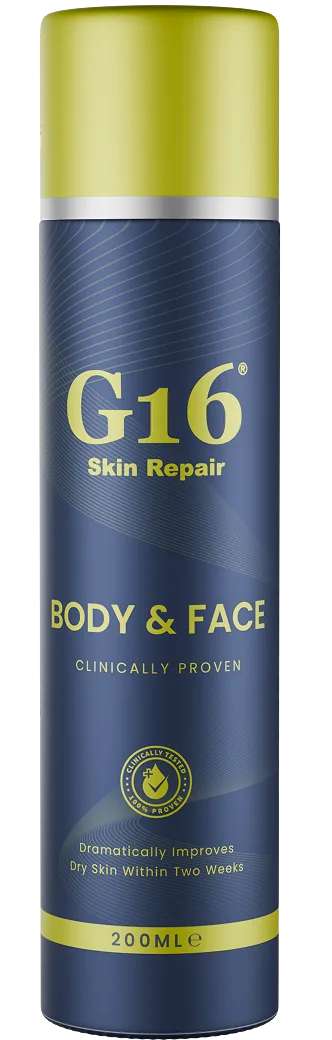
G16 Skin Repair Lotion is a cosmetic moisturiser. Patch test on a small area before first use, keep it away from the eyes and mucous membranes, and keep it out of reach of children. If your skin is broken, bleeding or infected, or if it gets worse rather than better, speak to a GP or a dermatologist.
