


A callus is your skin defending itself, which is why it keeps coming back. Where a patch of foot takes repeated pressure or rubbing, the skin makes more of itself, laying down hardened layers until the area is thick enough to cope. File it away without changing what caused it and the skin simply rebuilds, often thicker than before.
The medical name for that thickening is hyperkeratosis. It is not a disease and for most people it is not a problem. It becomes one when the callus grows thick enough to hurt, to crack, or to change the way you walk.
Callus or corn? They are not the same
| Callus | Corn | |
|---|---|---|
| Size and edges | Broad, diffuse, no clear border | Small, round, sharply defined |
| Where | Ball of foot, heel, side of big toe | Tops and sides of toes, between toes |
| Centre | Even thickness throughout | Hard central core that presses inward |
| Pain | Aches under pressure, if at all | Sharp, focused pain when pressed |
The distinction matters because a corn has a core that presses down into the tissue underneath. Filing the surface off a corn does very little, and digging at it is a good way to cause an infection. Corns are worth a podiatrist.
What is actually causing it
- Footwear. The single biggest cause. Shoes that are too tight concentrate pressure; shoes that are too loose let the foot slide and rub. High heels shift your body weight onto the ball of the foot, which is why calluses there are so much more common in women.
- Going barefoot or wearing backless shoes. Without a heel counter to hold the foot, the heel pad spreads on impact and the skin at the rim thickens in response.
- Foot shape and gait. Bunions, hammer toes, flat feet, high arches and dropped metatarsal heads all put more load through specific points. If your callus is always in exactly the same spot, the structure of your foot is the reason.
- Standing or walking for a living. Hours of loading, every day.
- Thinning fat pads with age. The natural cushioning under the ball and heel thins as you get older, so the skin takes more of the impact.
- Dry skin. Dry, hardened skin is less flexible, so it thickens and cracks more readily than supple skin under the same load.
Why filing alone does not work
Removing the callus does nothing about the pressure that built it. Worse, aggressive filing can trigger a rebound: the skin reads the sudden loss of its protective layer as a reason to build more, faster. People who file hard every week often have thicker calluses than people who never touch them.
What works is doing three things together:
- Reduce the pressure so the skin has no reason to keep rebuilding.
- Soften what is already there so it can come away gradually instead of being torn off.
- Keep the skin supple so it flexes under load rather than hardening and splitting.
Reducing the pressure
- Shoes with a wide enough toe box that your toes are not compressed, and enough depth that the top of the foot is not rubbing.
- A cushioned insole, or a metatarsal pad if the callus is under the ball of the foot. These redistribute load rather than just padding it.
- Lower heels, or at least fewer hours in high ones.
- Socks. Barefoot inside shoes means direct friction on skin.
- If the callus keeps returning in the same place despite all of this, the cause is structural and a podiatrist can assess it properly. Custom orthotics fix problems that no amount of filing will.
Softening what is already there
Hardened keratin is held together by bonds between the dead cells. Softening a callus means either hydrating it so it becomes pliable, or loosening those bonds so the layers release.
- Soak, then file gently. Ten minutes in warm water, then a foot file or pumice on damp skin, light pressure, once or twice a week. Never on dry skin and never until it is sore.
- Urea. At 20 to 40 per cent it both hydrates and breaks down keratin, and it is the standard pharmacy recommendation for thick foot skin. Cheap and widely available.
- Salicylic acid. Effective, and the active in most medicated corn plasters. Worth knowing that those plasters concentrate acid on a small area and can damage healthy surrounding skin, so they need care.
- Alpha hydroxy acids. Glycolic and lactic acid loosen the bonds holding dead cells together, so built-up layers lift and come away gradually rather than being scraped off. Gentler on the surrounding skin than a concentrated plaster.
If you have diabetes, do not treat foot calluses yourself. Reduced sensation means you may not feel damage as it happens, and reduced circulation means small wounds heal slowly and can become serious. No filing, no acid products, no corn plasters. Foot care belongs with your podiatry team, and most people with diabetes are entitled to regular checks.
Where G16 fits, and where it does not
G16 Skin Repair is a glycolic and lactic acid lotion, so on feet its job is the second item on that list: loosening the built-up keratin so it releases, while the glycerin, aloe vera and shea butter keep the newer skin underneath supple enough not to crack.
It suits broad, hardened, dry calluses and generally thickened skin on the heels and soles. Used after a bath, when the skin is dry, and given time to work rather than washed straight off.
It is not the answer for a corn, which has a core that a surface treatment will not reach. It will not do anything about the pressure that caused the callus, so on its own it is half a solution. And it should not go on skin that is cracked open, bleeding or infected.
If you want the cheapest thing that works, a 25 per cent urea foot cream from any pharmacy is a sensible first try. G16 is worth considering if you also have thickened, scaly skin elsewhere and would rather use one product than two.
When to see a podiatrist or GP
- You have diabetes, peripheral neuropathy or poor circulation. Any foot problem, straight to a professional.
- The callus is painful enough to change how you walk.
- There is a crack that is bleeding, or any sign of infection: heat, swelling, redness spreading, pus or a bad smell.
- It keeps returning in exactly the same place, which points to a structural cause worth assessing.
- There is a dark spot within the callus, which occasionally indicates a wart or bleeding underneath rather than simple thickening.
Common questions
No. Cutting risks going deeper than you intended, and a wound on the foot is slow to heal and easy to infect. Podiatrists do debride calluses with a blade, but they are trained, they can see the tissue planes and they work in sterile conditions. At home, soften and file gradually instead.
Because the pressure that built it is still there. A callus is a response, not a fault. Until the footwear, the gait or the load changes, the skin will keep rebuilding. Removing it and changing nothing else guarantees it returns, often thicker.
Foot skin is the thickest on the body, so it is slower than anywhere else. With daily treatment and gentle weekly filing, expect a noticeable difference in the first two weeks and a properly soft heel after four to six. Rushing it with hard filing sets you back rather than forward.
Mostly no. A modest callus is useful protection, and runners and dancers rely on them. The problems start when one gets thick enough to hurt, to crack open, or to alter your gait, and when the person has diabetes or poor circulation, where any thickening needs professional attention.
Both work and they work differently. High-strength urea, 20 to 40 per cent, hydrates as well as breaking down keratin, and it is cheap and sold everywhere. Glycolic and lactic acid loosen the bonds between dead cells and tend to be gentler on the healthy skin around the callus. If cost is the deciding factor, start with urea.
The product behind this guide
G16 Skin Repair is a glycolic and lactic acid body lotion for built-up, scaly and thickened skin.
200ml. Made in the UK. 21 day money back guarantee.
Dry skin treatment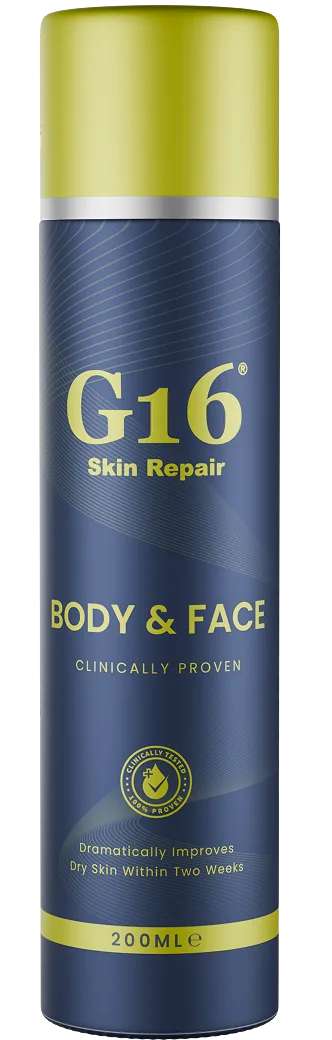
G16 Skin Repair Lotion is a cosmetic moisturiser. Patch test on a small area before first use, keep it away from the eyes and mucous membranes, and keep it out of reach of children. If your skin is broken, bleeding or infected, or if it gets worse rather than better, speak to a GP or a dermatologist.
