


Dry, rough, darkened elbows are almost always a build-up problem rather than a moisture problem. The skin there is thicker than almost anywhere else on the body, has very few oil glands, and gets leaned on constantly. Dead cells accumulate, the surface thickens, and because thickened skin scatters light differently it also looks darker. That is why moisturiser alone so often disappoints: it softens the build-up without removing it.
Why elbows specifically
Elbow skin is different from the skin either side of it, and every one of those differences works against you.
- It is thicker. The stratum corneum over a joint is built to survive stretching and folding, so it is naturally tougher and more prone to accumulating layers.
- It has almost no sebaceous glands. Very little natural oil reaches the surface, so there is nothing holding water in.
- It is under constant mechanical pressure. Leaning on desks, tables and armrests triggers the same thickening response that produces calluses on feet.
- It folds and unfolds thousands of times a day, which cracks a dry surface open along the creases.
- It gets missed. Most people moisturise arms and legs and skip the joints entirely.
Why they go dark
This is the part that worries people most, and the usual explanation is reassuring. Thickened skin looks darker because there is simply more of it between the light and the tissue underneath, and because the roughened surface scatters light rather than reflecting it cleanly. Reduce the thickness and much of the darkness goes with it.
There is a second mechanism worth knowing about. Repeated friction and rubbing can stimulate genuine pigment production, which is why elbows, knees and knuckles darken in people who lean, kneel or scrub at them. That component fades more slowly and only once the friction stops.
A useful test. Wet the skin and look again. If the darkness lifts noticeably when the surface is hydrated and flattened, most of what you are seeing is build-up and texture rather than pigment, and it will respond to removing the build-up.
When dark elbows mean something medical
Occasionally darkening at the elbows, neck, knuckles or armpits is a sign of acanthosis nigricans, where the skin becomes velvety and thickened rather than dry and scaly. It is associated with insulin resistance, and it is worth mentioning to a doctor because the skin sign is not the problem, the metabolic picture behind it is.
Two other patterns to be aware of. Very dry, scaly elbows and knees from childhood, alongside similar skin on the shins, can be part of ichthyosis vulgaris rather than simple neglect. And thickened, well-defined, silvery plaques on the elbows specifically are a classic site for psoriasis, which is a different condition needing different treatment.
What actually helps
Things that are not a product
- Stop leaning on them. This sounds trivial and it is the single most effective change for most people. The thickening is a response to pressure, so removing the pressure lets it reverse.
- Shorter, cooler showers and a non-soap cleanser. Hot water strips what little oil is there.
- Moisturise within about three minutes of drying, while the skin still holds water. Applying to bone-dry skin traps far less.
- Do not scrub. Aggressive physical scrubbing damages the surface and triggers more thickening, which is the opposite of what you want.
Ingredients that do something
- Keratolytics such as glycolic acid, lactic acid, salicylic acid and urea at higher strengths. These loosen the bonds holding dead cells together so the build-up comes away rather than being softened in place. This is the category that addresses the actual problem.
- Humectants such as glycerin and urea at lower strengths, which draw water into the layer.
- Occlusives such as shea butter and petrolatum, which slow water loss. Useful, but they do not remove anything.
An ordinary body lotion is mostly the third category. That is why it makes elbows feel better for an hour and look the same the next morning.
Where G16 fits, and where it does not
Thickened, scaly elbows are close to what G16 Skin Repair is built for. Its glycolic and lactic acid loosen accumulated dead skin so it lifts away, while aloe vera, glycerin, panthenol, vitamin E and shea butter hydrate the layer underneath as the build-up reduces. On elbows it is applied twice daily like anywhere else.
On timing, be realistic. The process starts in the first week, there is often a flaky phase around day five to seven as loosened skin comes away, and most people see a visible difference within the first two weeks. The full course is 28 days, and thicker or long-standing build-up can take up to about six weeks. Elbows tend to sit at the slower end of that range precisely because the skin is thick.
Where it is not the answer: skin that is cracked open, bleeding, inflamed or infected. Darkening that is pigment rather than build-up, which will improve only partially. Acanthosis nigricans, which needs the underlying cause addressed. And psoriasis on the elbows, which is a different condition and needs treatment aimed at inflammation, not exfoliation.
When to see a doctor
- Velvety, thickened darkening at elbows, neck, armpits or knuckles, particularly with weight gain or a family history of diabetes.
- Well-defined raised plaques with silvery scale, which suggests psoriasis rather than dryness.
- Deep cracks that bleed, or any sign of infection such as spreading redness, heat, swelling or pus.
- Sudden change in one elbow only, or an area that thickens, ulcerates or fails to heal.
- Dry scaly skin at the elbows and shins since childhood, which may be an inherited ichthyosis worth naming properly.
- No improvement after several weeks of consistent care.
Common questions
Usually because the skin there is thicker, not because it contains more pigment. Thickened, roughened skin scatters light instead of reflecting it evenly, which reads as darker. Reducing the build-up usually lifts a good deal of the colour. Repeated friction from leaning can also stimulate real pigment production, and that part fades more slowly and only once the leaning stops.
Because most moisturiser addresses water loss, and rough elbows are mainly a build-up of dead cells. Softening that layer makes it feel better temporarily but leaves it in place, so the roughness and darkness return. Something keratolytic, meaning an ingredient that loosens the bonds between dead cells so they come away, addresses the actual problem. Moisturiser still matters underneath it.
Better not to scrub hard. Thickening at the elbow is partly a protective response to friction and pressure, so aggressive scrubbing tends to provoke more of it, and it can damage the surface enough to cause cracking. Gentle removal through a chemical keratolytic works with the skin rather than against it.
Slower than most areas, because elbow skin is among the thickest on the body. With consistent twice-daily use the process starts in the first week, there is often a flaky phase around day five to seven, and a visible difference usually appears within the first two weeks. The full course is 28 days, and long-standing thickening can take up to about six weeks. Stopping the leaning that caused it makes a large difference to how well it holds.
The product behind this guide
G16 Skin Repair is a glycolic and lactic acid body lotion for built-up, scaly and thickened skin.
200ml. Made in the UK. 21 day money back guarantee.
Dry skin treatment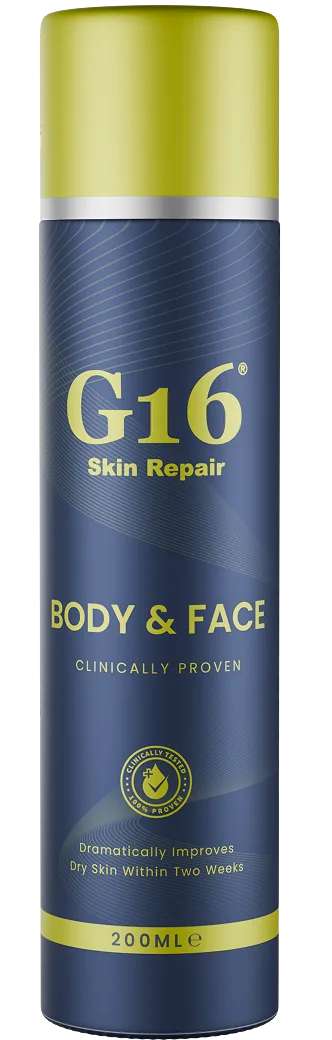
G16 Skin Repair Lotion is a cosmetic moisturiser. Patch test on a small area before first use, keep it away from the eyes and mucous membranes, and keep it out of reach of children. If your skin is broken, bleeding or infected, or if it gets worse rather than better, speak to a GP or a dermatologist.
