


If you have stopped wearing shorts, or you shave carefully and the dark dots are still sitting there an hour later, this is the page. The frustrating part is that strawberry legs is not one condition at all, it is a look, and four different things cause it. Which one you have decides what works, and it is almost certainly not scrubbing harder.
The four causes, and how to tell them apart
| Cause | What you see and feel | What it actually is |
|---|---|---|
| Open comedones | Dark dots, skin feels smooth | Pores holding trapped oil, dead skin and hair. The dark colour is oxidation, the same as a blackhead on the face |
| Keratosis pilaris | Dots you can feel, like fine sandpaper | Keratin plugging the hair follicles. Often red or brown-toned. Very common |
| Folliculitis | Red, sometimes sore or itchy bumps, may have a white head | Inflamed or infected follicles, often after shaving |
| Ingrown hairs | Individual raised bumps, sometimes with a visible dark hair curled underneath | Hair growing back into the skin instead of out of it |
Run a hand over the area with your eyes shut. If you can feel roughness, it is keratin. If the skin feels smooth and the dots are purely visual, it is more likely open pores. If anything is sore, red or has a head on it, that is inflammation and needs a different approach entirely.
Why scrubbing makes it worse
Physical scrubs, exfoliating gloves and dry brushing feel like they should be the answer. They are not, for three reasons.
- The dark dots are inside the follicle. Abrading the surface does not reach them.
- Scrubbing irritates, and irritated skin produces more keratin, so a bumpy texture gets bumpier.
- On inflamed follicles, scrubbing spreads bacteria across the area and turns a few spots into many.
Chemical exfoliation works where physical exfoliation does not, because acids get into the follicle rather than skating over the top of it.
What actually works
Change how you shave
Shaving causes or worsens three of the four. Almost everyone can improve strawberry legs just by changing this.
- A sharp blade. A blunt one tugs the hair and drags across the skin, which is what inflames follicles. Change it far more often than feels reasonable.
- Shave at the end of a shower, when the hair is softened.
- Use a proper shaving cream or gel, never soap and never dry.
- Shave in the direction the hair grows. It is a less close shave and far fewer ingrown hairs.
- Rinse the blade between strokes and let it air dry, because a wet blade in a warm bathroom grows bacteria.
- Do not shave the same patch repeatedly in one session.
Use an acid rather than a scrub
- Salicylic acid (BHA) is oil-soluble, so it gets down into the pore. The best single choice if your dots are open comedones and the skin feels smooth.
- Glycolic and lactic acid (AHAs) loosen the bonds between dead cells on the surface and in the follicle opening. Better where the skin feels rough, which means keratin.
- Urea at 10 per cent and above softens keratin and hydrates. Cheap and available in every pharmacy.
Apply to dry skin, not in the shower where it is diluted and rinsed away within a minute. Start every other day and build up. If the skin stings, goes red or feels tight, you are using too much too often.
Moisturise properly
Dry skin makes every version of this worse, because dry skin sheds unevenly and the follicle openings clog faster. Whatever else you do, keep the legs moisturised daily.
Consider laser hair removal if shaving is the driver
If your problem is genuinely shaving-related — ingrown hairs, folliculitis, or visible dark hairs under the skin — removing the hair removes the cause. It is expensive, and it is the only thing that fixes that version permanently.
What will not work
- Pore strips. Made for the nose, no use on legs, and they do not reach follicular keratin.
- Squeezing. Turns a cosmetic dot into a scar or an infection.
- Coconut oil. Pleasant, but it does nothing to keratin and is comedogenic for some people.
- Anything promising results overnight. Follicles take weeks to clear and refill.
Set the expectation honestly. If your strawberry legs are caused by keratosis pilaris, it cannot be cured, because it is genetic and lifelong. It can be made dramatically less visible with consistent treatment, and it usually improves with age. But it will return within weeks of stopping. Anyone selling you a permanent fix for KP is selling you something that does not exist.
Where G16 fits, and where it does not
G16 Skin Repair is a glycolic and lactic acid lotion, so it is the AHA option above. It suits the version of strawberry legs where the skin feels rough, meaning keratin is the problem, and it treats the whole leg rather than spot-treating, which is what you want for something this widespread. The aloe vera, glycerin and shea butter also cover the moisturising step, so it does two of the jobs at once.
It is not the best choice if your dots are open comedones on smooth skin, where a salicylic acid product will get into the pore more effectively. It is not for actively inflamed or infected follicles, which need to settle first, and possibly an antibacterial wash or a GP. And it does nothing about ingrown hairs caused by shaving, where technique and hair removal are the answer.
When to see a doctor
- Bumps are painful, spreading, or producing pus, which suggests infection rather than blocked follicles.
- There is fever alongside a bumpy rash.
- Nothing improves after three months of consistent, sensible treatment.
- The bumps appeared suddenly in adulthood having never been there before.
- You are scarring or getting persistent dark marks, where a dermatologist can offer prescription options.
Common questions
It depends on the cause. Ingrown hairs and shaving-related folliculitis can be resolved permanently by removing the hair, with laser for example. Open pores can be kept clear indefinitely with regular acid use. Keratosis pilaris cannot be cured, because it is genetic, but it can be made much less noticeable and often eases with age.
Texture usually improves first, often within the first two weeks. The dark dots themselves take longer, because pigment fades slowly, so allow two to three months for the appearance to change properly. Improving your shaving routine can show results within a couple of weeks on its own.
Shaving causes or worsens three of the four versions, so it is a major factor but not the whole story. Keratosis pilaris happens regardless of whether you shave. If your legs are rough to the touch, shaving is aggravating it rather than causing it.
Generally not, and it often makes things worse. The blockage sits inside the follicle where a surface scrub cannot reach, and the irritation from scrubbing prompts the skin to produce more keratin. Chemical exfoliation with an acid gets into the follicle, which is why it works where scrubbing does not.
Deeper skin tones are more prone to post-inflammatory hyperpigmentation, meaning any irritation leaves a dark mark that outlasts the bump itself. That makes gentleness more important, not less: aggressive scrubbing or picking will leave marks that take months to fade. Consistent, mild chemical exfoliation and daily moisturising is the better route.
The product behind this guide
G16 Skin Repair is a glycolic and lactic acid body lotion for built-up, scaly and thickened skin.
200ml. Made in the UK. 21 day money back guarantee.
Keratosis treatment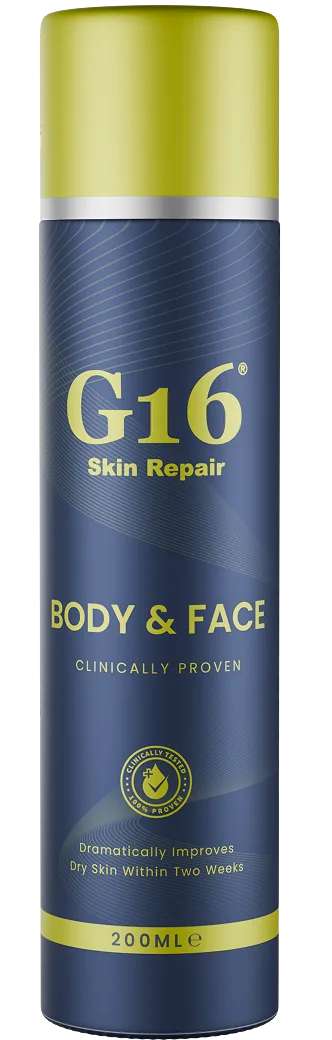
G16 Skin Repair Lotion is a cosmetic moisturiser. Patch test on a small area before first use, keep it away from the eyes and mucous membranes, and keep it out of reach of children. If your skin is broken, bleeding or infected, or if it gets worse rather than better, speak to a GP or a dermatologist.
